Posted by Nick Jubber on April 11th, 2022
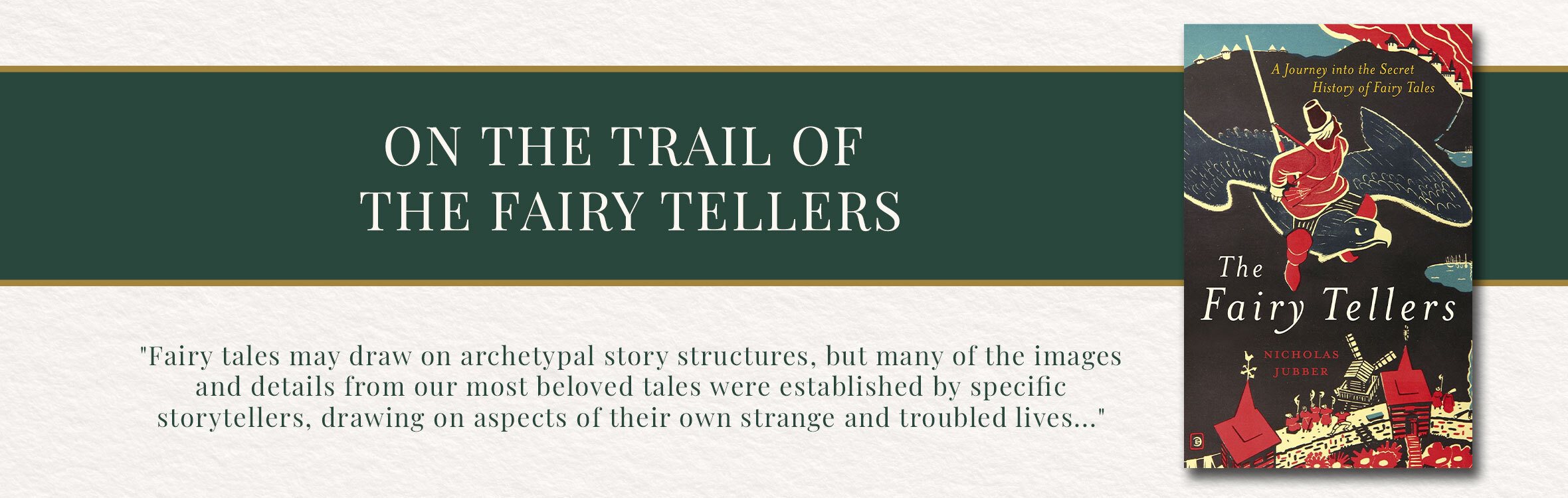
Fairy Tales are so universal, it would be madness to pin them down to a particular place. Surely? After all, there are more than 900 versions of 'Cinderella' around the world, and stories like ‘Beauty and the Beast’ have been re-told for thousands of years (at least, according to a study into the phylogenetic roots of ancient stories). But over the last few years, researching about fairy tales, travelling around some of the places associated with them, and interviewing scholars who have devoted their working lives to particular areas of storytelling history, I found that particularity exists alongside universality. Fairy tales may draw on archetypal story structures, but many of the images and details from our most beloved tales were established by specific storytellers, drawing on aspects of their own strange and troubled lives. Here are a few of the places I visited along my trail...
Naples
The godfather of European fairy tales was a roaming courtier called Giambattisata Basile, who told the earliest fully-formed Western versions of ‘Rapunzel’ and ‘Cinderella’, as well as early iterations of ‘Sleeping Beauty’ and many other iconic tales. He grew up around Naples, and in his seventeenth century collection, The Tale of Tales, he celebrated the charms of ‘beautiful Naples’ where ‘the stones are manna in your stomach, the rafters are sugarcane…’ Basile’s Naples was a rambunctious place, the most populous city in Europe at the time, and it’s still a noisy metropolis. If you wander the streets, from Saint Martin’s Charterhouse down through the Spanish Quarter to Pio Monte della Misericordia, you can wormhole into Basile’s world, especially when you look at Caravaggio’s ‘Seven Acts of Mercy’, which has been hanging in the same spot since the early 1600s. The artist drank at the same tavern as Basile, the Cerriglio - where you can still dine on octopus meatballs and mussel soup. It was the storyteller’s favourite hang-out, although Caravaggio didn’t enjoy it so much: he was wounded there in a knife-fight in 1609.
Cassel
The Brothers Grimm lived in this German city, in the Hesse region, and it’s where they put together their famous collection of stories, The Children's and Household Tales (first published in 1812). Unfortunately, Cassel was bombed in World War II, but there’s a brilliant interactive museum near their old street - ‘Grimm World’. There you can dive inside the witch’s house of sweets, see Little Red Riding Hood’s granny turn into a wolf and ask the magic mirror who’s the fairest one of all. The brothers are famous all around the world, but not so the storytellers who gave them their tales. One of their most significant contributors lived across the road from the brothers - an apothecary’s daughter called Dortchen Wild. She fell in love with Wilhelm Grimm and narrated many tales, usually to Wilhelm on his own, often in intimate settings such as her married sister’s summer-house. These included ‘Rumpelstiltskin’, ‘The Six Swans’ and ‘The Elves and the Shoemaker’. Many scholars also believe it was Dortchen who first narrated that iconic Grimm tale, ‘Hansel and Gretel’. Her tales contain a lot of strangeness, but they also celebrate kindness and patience, virtues that Dortchen had in spades; and there’s a particular emphasis on thrift - Gretel having to do the housework for the witch, for example - which echoes Dortchen’s character and contrasts with some of the Grimms’ other story contributors. It’s through letters, diaries and Dortchen’s own reminiscences, narrated to her daughter late in life - that we can learn about this significant but much neglected figure in fairy tale history and discover the range of voices whispering across the centuries, behind what is probably the most famous of all fairy tale collections.
Odense
When they had moved to Berlin, the Grimms were visited by another famous storyteller - Hans Christian Andersen. They became friends, and read their tales to each other. Andersen’s childhood home is also intact, although somewhat less impressive, in the Danish city of Odense - a small yellow-walled house under moss-clad tiles, where there’s barely enough space inside to swing a cat. The storyteller used his childhood home in many of his tales, including the opening of ‘The Snow Queen’ (as he pointed out in his diaries). Nearby, you can trawl around his old paper-cuttings, the contents of his travelling trunk and collections of his tales in the Hans Christian Andersen Museum, and if you walk the streets of Odense you’ll find characters from his tales, cast out of iron, all around you - a Steadfast Tin Soldier beside a cafe, Thumbelina emerging from flower petals near the casino, Andersen himself in giant form beside the train station. Not that all the locals relish their most famous town-fellow: several told me they’d suffered from ‘Hans Christian Andersen Sickness’, a local phenomenon driven by frustrations at the way his fame has been exploited.
Kashmir
But fairy tales didn’t just flourish in Europe. Every region of the world has its own fairy tale tradition, and one of the richest is in India. A collection called the Ocean of the Stream of Stories was written in Kashmir by a courtier poet trying to soothe his queen during a civil war. The waterways of Srinagar still feel like something out of a magical tale, with painted shikaras weaving their way between the floating markets; and the cave of Amarnath, where the deities Shiva and Parvati are said to exist in eternal story-time, is an enduring site of pilgrimage for Hindus. It is Shiva and Parvati whose relish for stories frames the hundreds of tales narrated by the poet Somadeva to his queen in this beguiling story collection. Kashmir has some of the most beautiful scenery in the world, all the more poignant given its traumatic history. In its flowery meadows, pine forests and lakes covered with lotus leaves are the landscapes for some of the most colourful stories ever told - where lovers cavort amongst the lotus leaves, hide messages in forest temples, ride on the backs of lions and burst out of flowers woozy with the fragrances of Kashmiri springtime.
Aleppo
And for our last stop on this mini-trail, let’s consider one of the most tragic cities of recent years - the beautiful, ancient city of Aleppo in Syria. Long before it was gutted by bombs, it was a cross-roads in the Middle East, drawing in traders from Persia, the Mediterranean, Anatolia and the Caucasus. No wonder that when the French scholar Antoine Galland was looking for a manuscript of the 1001 Nights, he wrote to a friend in Aleppo to send it to him; and when he’d run out of tales to tell, he met a young storyteller from Aleppo, called Youhenna Diyab. Having travelled across the Levant and the Mediterranean with a renowned French archaeologist, and been received by the Sun-King at Versailles, Youhenna was staying in the archaeologist’s house when he met Galland and narrated to him, amongst many others, the tales of ‘Aladdin’, ‘Ali Baba and the Forty Thieves’ and ‘The Ebony Horse’, tales that would become storytelling mainstays all around the world. But it is in Aleppo, amongst the ablaq brickwork and latticewood ceilings of the souk, that Youhenna’s tales were spawned, a place that has sadly proven more vulnerable than the tales themselves. Aleppo may have been devastated by recent warfare, but the tales it spawned, more happily, show no sign of being forgotten.