


Posted on August 10th, 2021 by Jack Ruddy
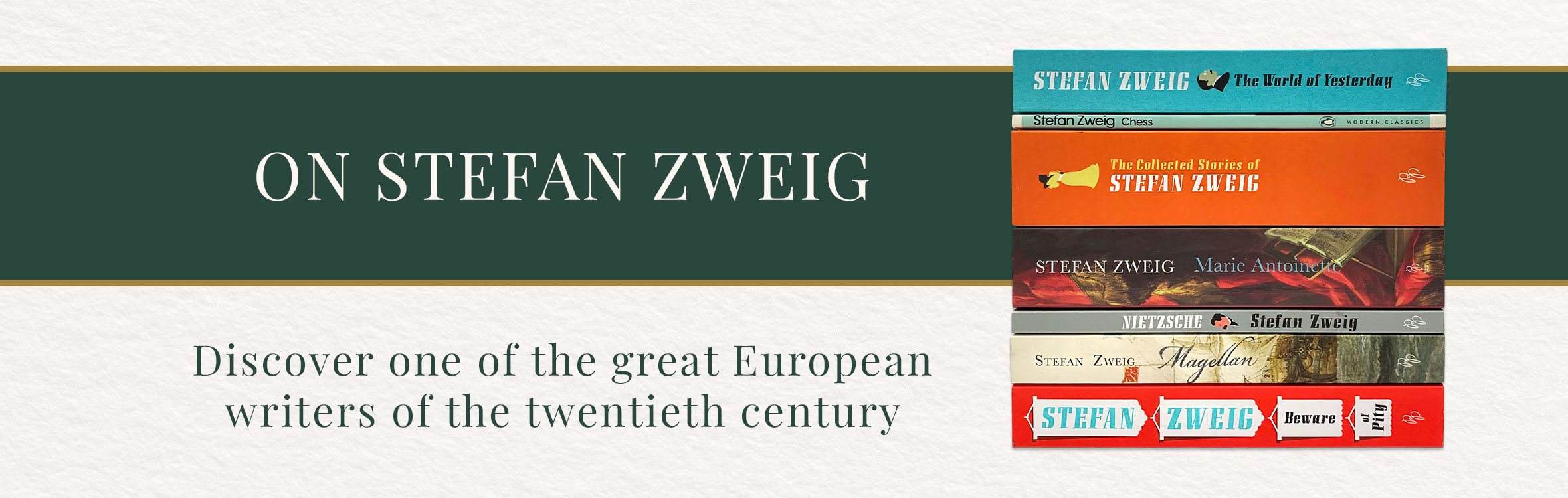
Stefan Zweig was a largely forgotten about author in Britain until this last decade. Despite his popularity on the continent, when it first appeared in the United Kingdom his work was dismissed as superficial, too middle-class, not sophisticated enough to be great. I would beg to differ and say that I find his work moving and effective. Zweig, however, was always humble about his own talents, going so far as to say what an honour it was to have his books burned by the Nazis alongside the works of Thomas Mann and Franz Werfel.
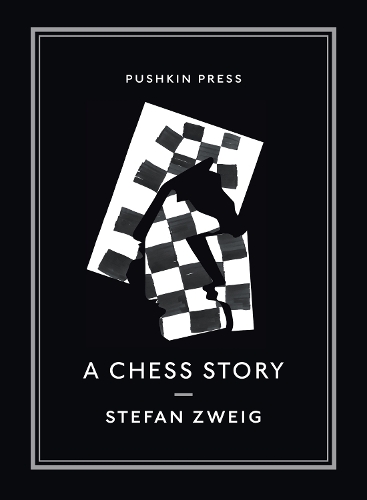
Others have noted Zweig for his humanism and the effecting style of his prose. He is one of the best writers of tragedy that I have come across, and is always able to root the sadness on a very human level, creating sympathy with a diverse number of subjects. His prose is gripping and can be compulsively page turning even when the subject matter is playing chess (in A Chess Story which vividly portrays a man's mind undergoing the stress of Nazi imprisonment and where the only escape lies with a book of famous chess games).
Born in 1881 to a wealthy Jewish family in Vienna, the capital of what was then the Austro-Hungarian Empire, he studied philosophy at university. He was a pacifist during the war but worked in the archives for the Ministry of War. Zweig left Austria in 1934 because, even though he enjoyed a high public profile, he was still not safe from persecution, because of his Jewishness, after Hitler was appointed Chancellor of Germany in early 1933. He was right to do so as when he lived in London his address was on a list of those to immediately arrested should the United Kingdom be successfully invaded. In 1940 he left England for, first, the United States, and then Brazil, where he would die, aged just 60, in 1942.
He was friends with a number of leading figures in the day, men such as Sigmund Freud and Richard Strauss. He worked with Strauss on the opera The Silent Woman by providing the libretto. Strauss courageously refused to remove Zweig's name from the programme under pressure from Dr Goebbels. It was largely due to this that the show closed after just three performances.
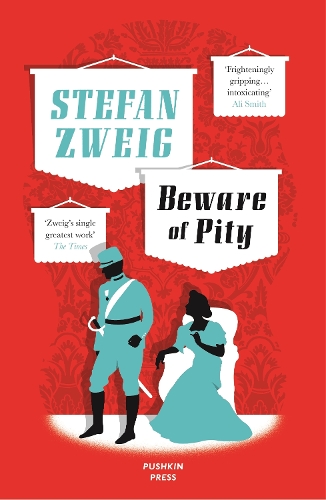
His re-emergence into our literary collective conscious is in large part down to the publishers Pushkin Press whose range covers all his novellas and his novel, Beware of Pity (also called The Impatience of the Heart in the Penguin edition, a more direct translation from the original German title) with wonderful translations by Anthea Bell. This novel is set in a rural part of the Austro-Hungarian Empire and is supposedly related to the author by the subject of the book as the story of what led him to be decorated for bravery in the First World War. In truth he had not been brave so much as wilfully reckless in the fighting and he had been so because he wished to atone for his actions before the war. He made one innocent mistake and from this he feels driven to act but he only compounds the harm he has done. This destructive feeling was pity, not the admirable pity of seeing someone in pain and wishing to relieve them of that for the benefit of the other but a baser motived version where you act only so that you might not have to experience the feeling anymore. The short-term pain of doing the right thing would have been far easier in the long run. As with Romeo and Juliet we know from the beginning that this story will have a tragic ending and it is all the more powerful for that. Beware of Pity is told with beautiful, atmospheric descriptions of what the last glorious moments of the Austro-Hungarian empire felt like before the war would sweep the Habsburg monarchy off the map and into history. The bar and café culture, the rigid societal etiquette, the importance of honour, both one's own and of one's regiment are all captured in this novel.
He came to prominence as a journalist and also branched out into biographies, covering figures as diverse as Nietzsche, Magellan and Marie Antoinette. The latter paints a sympathetic portrait of a queen whose reputation was so tarnished by gossip, due to the inability of the king to perform his husbandly duties, that the Bourbon monarchy, in its weakened state, was unable to maintain itself. The scurrilous attack on Marie-Antoinette was an indirect attack on the king and the institution of the monarchy itself. Attacks of this sort have been recognized as having the potential to devastate an institution since time immemorial, from the epics of Homer to the Lord Tennyson’s Idylls of the King, where the affair of Guinevere and Lancelot brought about the destruction of the Round Table and Arthur’s kingdom. Insights like this is one of the things which marks Zweig’s biographical works out from others who write on the same historical figures. In the story Twilight Zweig blended his biographies with fiction to write about the fate of a courtier of Louis XV's, the marquise de Prie, who, upon losing favour, returns to her country estate and becomes increasingly isolated, unable to tempt anyone of rank away from Versailles to see her. The facts of her life are correct but Zweig has added in a rich narrative which gives a sense of her character and how she, effectively, grieves for the life she has lost being exiled from court. His own memoir The World of Yesterday beautifully characterises the decline and collapse of the Austro-Hungarian Empire, giving a factual description to what was so accurately captured in prose of Joseph Roth in his novels The Radetzky March and The Emperor's Tomb.
Zweig occurred to me as a topic for this piece because of the fantastically atmospheric novel The Passenger by Ulrich Alexander Boschwitz (our Book of the Month in July). Both Jewish and of Germanic backgrounds they shared a similarly tragic fate. Boschwitz was on a passenger liner returning to the United Kingdom from Australia which was torpedoed and sunk in 1942. Zweig, having fled to Brazil before the war, committed suicide with his wife only a few months after Boschwitz's death, believing the Nazi onslaught to be insuperable.
A number of his works have appeared on film, perhaps most famously Letter from an Unknown Woman starring Joan Fontaine and Louis Jourdan. More recently The Grand Budapest Hotel was inspired by Zweig's writings and directed with customary flair by Wes Anderson. I would urge anyone interested in Belle Epoch Europe to read give his novels or own memoir a read. Alternatively, the biography of Marie Antoinette is a perfect introduction for those interested in knowing more about the woman than just the infamous phrase "let them eat cake".
Hatchards Recommends
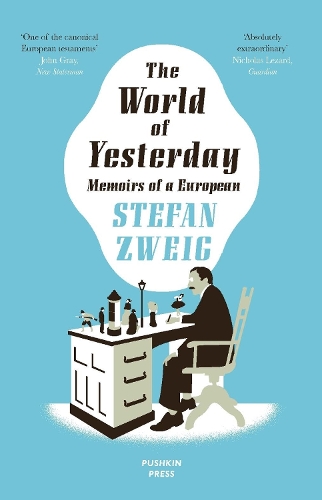 The World of YesterdayStefan ZweigPrice: £12.99Austrian writer Stefan Zweig's final work, posted to his publisher the day before his tragic death, brings the destructi... See moreAustrian writer Stefan Zweig's final work, posted to his publisher the day before his tragic death, brings the destruction of a war-torn Europe vividly to rise. See more
 MagellanStefan ZweigPrice: £12.99In this biography Zweig brings to life the Age of Discovery by telling the tale of one of the era's most daring adventur... See moreIn this biography Zweig brings to life the Age of Discovery by telling the tale of one of the era's most daring adventurers. In typically flowing and elegant prose he takes us on a fascinati... See more
 Marie AntoinetteStefan ZweigPrice: £12.99Tells the story of Marie Antoinette, who became the Queen of France at the age of fifteen. This title analyzes the chemi... See moreTells the story of Marie Antoinette, who became the Queen of France at the age of fifteen. This title analyzes the chemistry of a woman's soul from her intimate pleasures to her public suffe... See more