

Reviews: Utopia Avenue (27)
“Dancing, architecture etc.”
(Hardback)
I find David Mitchell a slightly frustrating writer, but there is always plenty to enjoy in his books. As I have said before, I find the fantasy elements of his imaginary world and his battling immortals far fetched and impossible to take seriously, but when he writes about subjects more grounded in reality he can be engaging and perceptive.
Music and musicians are notoriously difficult subject matter for literature, but for me this book does it pretty well, and I found it a lot more convincing than Rushdie's The Ground Beneath Her Feet.
It tells the story of the eponymous fictional psychedelic pop-rock band, mostly in 1967 and 1968. The band's four members include three very different songwriters, and the structure of the book reflects this - each song on each of the band's three albums gets a chapter that follows its writer through some of the events that inspired it.
Inevitably, one of the three, guitar virtuoso Jasper de Zoet, is a host for one of Mitchell's immortal spirits, and as always there are plenty of links to his earlier books, but for me the other two main characters are more interesting. Dean Moss is perhaps the most typical rock star - a humble background from a troubled working class family in Gravesend, and an obsession with money and the trappings of fame. Elf Holloway is the band's keyboard player, something of a hybrid of Sandy Denny (whose folk background she shares, and also the unreliable Australian partner, and the hit American cover of an early song, in Denny's case Judy Collins and Who Knows Where the Time Goes) and Christine McVie, whose role in the band is closer to Elf's.
The band's journey includes many encounters with real musicians, and some of the anecdotes are based on stories associated with these real characters. I think all of the real people that the band meet are now dead, but this is never explicitly mentioned or explained. Inevitably these encounters lack depth and in some cases are just fleeting conversations, but that reflects the nature of music journalism.
Mitchell's credits mention Joe Boyd's White Bicycles: Making Music in the 1960s, and Boyd's story was clearly a major influence - the band's idealistic manager Levon Frankland shares many of Boyd's qualities, and many of the details are reminiscent of things that happened with Fairport Convention (who were one of Boyd's successes).
The recreation of the late 60s setting is fairly convincing and affectionate, and Mitchell largely avoids the more obvious pitfalls associated with writing about music and particularly describing fictional pieces, and the many real stories about the less glamorous side of life in bands offer plenty of scope for balance and entertaining escapades.
I don't want to be too critical - I found the story very readable, and was surprised how quick a read it was for such a large heavy book. So yes, another curate's egg, but for the most part a successful one.
“WOW WHAT AN ENDING.”
(Hardback)
For me this is not the usual David Mitchell novel as you have a relatively simple story about a band in the 60's who get together,meet the right people have the right manager .When it goes into the Psyche of the individual band member's is where the book gets really interesting,Griff, Dean,Jasper and Elf all have their own troubles to overcome and their own demons to exorcise.
The Band goes from strength to strength and really gets noticed when they go to the USA and tell a slimy TV show host that is coming to the end of his career how it is in the real world!!
Mitchell cannot finish a book without a 'What' moment this happens to jasper De Zoet.(recognise the name from a previous title).
The tale is spoilt with the gratuitous use of name dropping the great and good from the world of music,Bowie,Hendrix, Joplin, Cohen are only a few mentioned (stopped me giving 5 stars)BUT the ending ifs fantastic.
“Shut Up and Play the Hits”
(Hardback)
For readers new to David Mitchell, Utopia Avenue arguably rivals Black Swan Green as his most accessible entry to date, sidestepping the global and temporal acrobatics of Cloud Atlas et al in favour of a more straightforward - but no less flavoursome - tale.
We begin in the company of twentysomething Dean Moss: a bass player fresh from the dissolution of his band, rushing along Charing Cross Road in the late 1960s. Within seconds, we are immersed in the smoky heart of the capital at a time of significant cultural upswell. Talent-spotted by an enterprising and enigmatic A&R man, Dean is collared to join three fellow musicians of different origins to assemble an eclectic new group, just as the twinned idealism and hedonism of the late 1960s reach a dizzying zenith.
What unfolds is the rise and fall of Utopia Avenue: a tale of sounds and styles, the conflicts and compromises of fame, and a dreamlike immersion into the “scenius” of this era: a window of extreme communal creativity that was open for a brief and brilliant time. The arc of the band is told in episodes, shifting perspectives from each of the four members. Some strands are more satisfying than others (and the same can be said of the celebrity cameos that crop up every few chapters), but Mitchell has an aptitude for maintaining a fizzy energy as he leaps from set-piece to set-piece.
There's nothing here to trip up those unversed in Mitchell's world, but readers of The Bone Clocks and The Thousand Autumns of Jacob de Zoet will find the most easter eggs to enjoy, especially when the internal conflict of guitarist Jasper de Zoet comes to the fore. What remains abundantly clear through Utopia Avenue is Mitchell's evergreen sense of energy and ear for a chewy description. The sights, sounds and smells of the novel leap out of the pages, and when Mitchell is firing on all cylinders, he remains one of the most enjoyable writers in the game. In sum, Utopia Avenue is a terrific burst of sound and colour, and another strong link in the chain of Mitchell's bibliography.
“The greatest band that never was”
(Hardback)
'Utopia Avenue' is about the rise of the titular, fictional 1960s band, but more specifically about the lives of the four band members - Dean, Griff, Elf and Jasper, all of whom are from different musical backgrounds, with their own stories. It's absolutely seeped in the popular culture of the 1960s; rock legends regularly appear in its pages - David Bowie chats to Jasper on the stairs, Brian Jones pinches Dean's glass of whiskey, Leonard Cohen flirts with Elf in a lift (amongst many encounters).
The book is divided into sections, each having the A or B side of an album at the start, followed by the titles and composers of songs. A chapter accompanies each song title, describing the influences behind it, at times moving into the past to explore how and why the song was written. The song writer is the main character within that chapter. I enjoyed the change of focus and how David Mitchell reveals different parts of the characters through this technique. Jasper, in particular, is a tortured genius, with mental health problems which are interestingly shown through his eyes, giving an insight into how very real such things are to someone who is ill. This approach, however, very much side-lines Griff, the drummer, who is not a lyricist, and who tends to remain a bit of a Yorkshire stereotype throughout the book (although he does have a chapter of his own, as does the manager, Levon, who is gay in a time that could lead to arrest).
I very much enjoyed the pace of the story, and the structure of the novel, but did think some of the characters became clichéd - the movie director and young, trophy wife, the drug dealers, for example . The appearance of the 1960s icons also lost its novelty after a while, although Jimmy Saville was an unpleasant surprise! Saying that, though, I was driven to find out what would happen to the band, almost unable to put it down towards the end, and the ending was surprisingly moving. A mixed bag, but some treats within the bag.
“Pentangle anyone?”
(Hardback)
Hmm struggling a bit with this. Although it’s nicely written but really chock full of rock stereotypes. I just kept thinking of the ‘take three girls’ pop group Pentangle. Female folk singer with lovely voice, jazzy bassist etc etc. After the authors previous novels this is just a bit meh
Page of 6
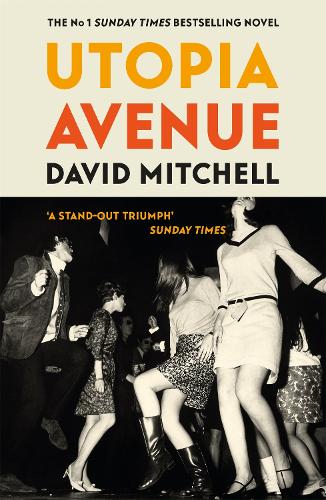
Utopia Avenue
Fiction, General Fiction
David Mitchell (author)
Paperback Published on: 13/05/2021
Price: £10.99