

Reviews: The Time Machine (9)
“The Time Machine”
(Paperback)
One of the first Science Fiction novels and one that possibly set the tone for the entire genre, The Time Machine is a fantastic read. Though it is only short, it presents a darkly realised version of future Earth in which humans have degenerated into the Eloi; frightened of the dark and living in the light, and the Morlocks; frightened of the light and living in the dark. When the 'Time Traveller' appears in the strange present of the year 802, 701 and his Time Machine is stolen, he must embark on a dangerous journey to get it back. However, what possibly makes the book a classic is not necessarily its subject matter, but rather the way it goes about it. Rather than have any kind of convoluted plot Wells decides to focus on society, class division, and ultimately humanity; undead even in the remote future, and it is this that truly makes the story great. Much recommended, one of the cornerstones of Science Fiction and a compelling and thought-provoking look at the state of humanity and the idea that nothing can last forever.
“Loved it!”
(Paperback)
The Time Machine – H G Wells
A Victorian scientist and inventor, The Time Traveller, hosts a dinner party with a number of anonymous, but professional friends. He exhibits a model of his Time Machine and demonstrates its functionality to the astonishment of all those present. An upscaled version of the apparatus is then used to transport the protagonist to a date in the future, specifically the year 802,701 A.D. Landing on a grassy hillside in what appears to be within the Thames valley area, the Time Traveller discovers a giant white marble sphinx on a pedestal. It is surrounded by ruins, greenery and assorted vegetation. Wells subsequently describes the scientist’s encounters with a strange, small, upper world humanoid species, the Eloi, and the pallid, primarily subterranean and disconcertingly ape-like Morlocks. What at first may appear a utopian societal structure rapidly descends into the dystopian and a pervading atmosphere of fear.
This is a vivid novella forecasting an eventuality which features the retrogressive metamorphosis of the accustomed Victorian elite and its proletariat equivalent. It begs the question what will happen next to life and the solar system in the fourth dimension of time. Can the scientist make multiple voyages and, moreover, can he be returned safely?
This tale is well structured, maintains interest value and a sense of meticulous empirical realism throughout. Narration by a sceptical unnamed dinner guest keeps the reader emotionally detached from the Time Traveller, but nonetheless unavoidably sucked into the mystery of the unknown to great and memorable effect. This is a quick, very enjoyable and thought provoking read.
“Ahead of its time.”
(Paperback)
Ahead of its time, yet, in some respects, very much of its time, The Time Machine is one of those novels that everyone with any interest in science-fiction literature should read. Naturally, it's impossible to conceive now of how it would have felt to read this novel back when it first appeared, but it's still easy to appreciate how big an influence it has had on science-fiction ever since.
It might seem an odd thing to say, but I feel that H.G.Wells, if reading his groundbreaking novel today, might think there are parts of it where he could have done better. It's far from a perfect novel - it might not even be a great novel - but certainly it deserves its recognition as a work that opened doors for countless novels written subsequently.
And who doesn't love to fantasise about all the things you could do with your very own time machine!
“An early science fiction classic”
(Paperback)
This book has been said to be one of the earliest novels of science fiction. While it is not a genre I know well, I believe that this book does set down some of the rules and standards that have become part of the definition of science fiction. A realistic setting, almost domestic, a real attempt to produce evidence that would satisfy a discriminating audience, and events just beyond expectation and credibility. In this novel the protagonist is not overly dramatic, his audience chosen for their professional scepticism, and the setting is so Victorian domestic that a reader can learn something of that period. In the light of the current fashion for dystopian vision, this is a chilling report of a world where evolution has defined humanity so as to be vaguely recognisable rather than the same, but developed. Written in 1895, this is a book that would shock today in its bleak view of life many thousands of years hence.
The Time Traveller is in his sitting room, expanding on his thoughts about humanity to his guests, known mainly by their profession (a Medical Man, a Psychologist, an Editor and others) in an after dinner discussion. No women appear in this setting; this is a gathering of scientific gentleman presumed to be sceptical about such dubious assertions that time travel is possible and indeed experienced by one of their number. He produces a model, beautifully made, of a prototype time travel machine, and explains when it disappears that he proposes to make a larger version in which he will travel to the future. His friends are unconvinced, but soon he invites them to believe such an attempt has been made.
The future is at once a paradise and a frightening place. Those he encounters are difficult to categorise, but the Time Traveller recalls an experience that is incredibly detailed. Proof of events is not utterly compelling, but there is every reason to believe that what occurred in this otherwise remarkable house cannot be easily understood.
This is an extremely short, readable classic which is stylistically of a time when the forces of industrialisation and invention were resulting in whole new world views, often painful, sometimes exhilarating. Its late nineteenth century setting is solid, its view of a possible future almost lyrical. Wells was a scientific journalist; a new profession which meant that he was presumably on the edge of discoveries that to the eyes of his contemporary readers would have seemed incredible. Thus time travel would have almost seemed credible by contrast, and it is long before the rules of causing upset in travelling backwards and forwards in time were set down.
This edition of which I received a review copy from Oxford University Press sets out an informative introduction and includes a substantial amount of additional text. The notes explain some of the more obscure references and greatly adds to the understanding of the book. If your tastes run to classic science fiction this novel is a defining introduction, and this edition explains much of the background and achievement of H.G.Wells as one of the most innovative writers of his time.
“One of the first time travel stories and therefore a must read for anyone fond of such stories!”
(Paperback)
H.G. Wells can fairly be considered the father of British science fiction and ‘The Time Machine' can equally as fairly be considered the progenitor of the time travel genre. To the modern reader, this book could be considered simple or predictable when, in fact, it was a spark that lit the flame of everything that came after it.
This is a really short book but packs in a lot, being both entertaining and meaningful. Drawing on contemporary Victorian fears surrounding the class divide and contemporary thoughts and speculation on Charles Darwin’s recently presented theory of evolution, Wells delivers a poignant warning for the future of humanity in his description of the Eloi and the Morlocks. In the future world of ‘The Time Machine’, the downfall of humanity has not come about as a consequence of some calamity or quirk of biological development, but as a consequence of flawed societal structures. In short, our fate is not determined by biology alone; it is how we treat one another that truly matters.
Ultimately, from reflecting on society to evolution to what it means to be human, there is a lot to discuss in such a short story! For anyone interested in classic science fiction, this is certainly a must-read book.
Page of 2
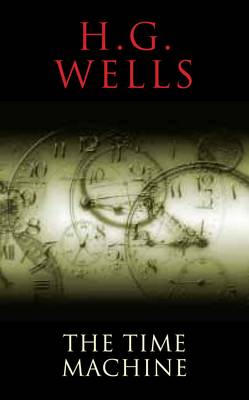
The Time Machine
Fiction, Classic & Literature, Paperback Classis
H. G. Wells (author)
Paperback Published on: 31/03/2012
Price: £6.99