

Reviews: The Silver Book (21)
“'Sounds a loud warning about our own times'”
(Hardback)
Set during in Italy's Years of Lead, marked by atrocities and violent clashes between the extreme Left and Right, Olivia Laing’s novel follows Nicholas who has fled London for Venice. After a chance encounter with renowned costume and set designer, Danilo Donati, he finds himself working first on Fellini’s Casanova, then Pasolini’s Salò, a reimagining of De Sade’s The 120 days of Sodom played out against the backdrop of the eponymous republic where Mussolini was installed by the Nazis, a site with personal resonance for both Danilo and Pasolini. When Casanova resumes, Danilo and Nicholas return to Rome where the delight of finishing the film is interrupted by news of Pasolini’s brutal murder. There’s a convenient confession, but no one really believes the confessor.
Laing folds her research seamlessly into this elegantly constructed, immersive novel. Just as Pasolini used Salò to draw parallels between fascism in the 1940s and the political violence of the 1970s, Laing implicitly does the same with the Years of Lead and our own time while telling Nicholas and Danilo's love story. We see events from Nicholas’s perspective, a naïve yet worldly young man, often ill at ease but entranced by the all-consuming world of cinema and its creators. Laing's descriptions of sets and costumes are strikingly evocative while her cool precision lends a distance to some of the more graphic descriptions of Pasolini’s work making it all the more effective, not least in the brutality of his murder which still remains unsolved. The blurb uses the word ‘noirish’ presumably for the mystery of what’s brought Nicholas to Italy but this is much more a beautifully executed novel of ideas wrapped up in an homage to Italian cinema which sounds a loud warning about our own times.
“An ode to old Italian cinema”
(Hardback)
“Hell is rising and is coming at you.” It is September 1974. Two men meet by chance in Venice. One is a young English artist, in panicked flight from London and in desperate need of rescue. The other is Danilo Donati, the magician of Italian cinema, the designer responsible for realising the spectacular visions of Fellini and Pasolini. Donati is in Venice, producing sketches for Fellini’s latest film, Casanova, when he meets Nicholas. A young and beautiful apprentice is just what he needs, and their fates align.
Danilo sweeps Nicholas away to Rome, into the looking-glass world of Cinecittà: the famous Italian film studio that is almost a character in itself. When Casanova is put on hold due to financial strains, Dani is invited to work on Pasolini’s new film, and the lovers move together to the set of Salò, Pasolini’s allegorical vision of sadistic power and moral collapse.
But Nicholas has a secret, and in this world of constant illusion, his real nature passes unseen. Amidst the rising tensions of Italy’s “Years of Lead”, Laing cleverly positions Nicholas as the catalyst who sets in motion a tragedy he never intended.
The Silver Book feels steeped in nostalgia, like The Talented Mr Ripley wandering through Cinecittà. Yet it carries an ominous warning for our own times, exploring the resurgence of fascism, the politics of art, complicity, and the place of the artist in turbulent periods.
Cinema played a huge part in my growing up. I remember going to the library to look at special film magazines I couldn’t possibly afford, seeing a world I could only access through articles and photographs. I still recall finding old pieces about Pasolini’s Salò. As a young queer person searching for affirmation, for mirrors, that dangerous world felt strangely familiar, and Nicholas read very much like that too.
I loved Pasolini’s shots, Fellini’s too, but Fellini’s never felt dangerous enough. What drew me to Pasolini was his restless questioning, his impolite and provocative metaphors on screen. Cinema always felt too exclusive to reach and so I left Pasolini aside after university.
Reading Laing now brought back the same feeling I had when I opened those old magazines, the same mix of fear and fascination.
Laing has said that The Silver Book was born from her fascination with 1970s Italian cinema and its politics, (I totally understand it as directors like Pasolini, Bertolucci, and Fellini were pushing boundaries in sex, politics, and form, they were artistically daring and politically dark) and from a desire to explore what happens when art and illusion meet power and secrecy. It is also a queer love story set against a volatile historical moment.
In interviews, Laing explained that she wrote it largely in Rome, in what she described as a feverish state, from dawn until the small hours, when the story seemed to arrive in a rush. The novel reads with that same energy. I devoured it in a few evenings, fully transported to Rome and beyond. The chapters with Donald Sutherland were quite fun, providing a lighthearted balance to the novel.
The final chapters hit me like Pasolini’s Alfa car running over my chest, an ominous warning “about the power machine and how it is affecting every aspect of society […] the poor might use a metal bar and the rich a stock-exchange manoeuvre. […] We are all guilty, because we are all ready to play at slaughtering each other, as long as we are able to own everything at the end of the slaughter.”
It is easy to blame everything on consumerism, but through Pasolini, Laing made me think harder about de-radicalisation in an era of unusually muddled beliefs acquired online.
On a side note, I found it fascinating that the UK edition ends with a “Truth Status” note, in which Laing reflects on “the risks in missing the point of Pasolini’s warnings about a system in which we are all enmeshed, and which has only grown more powerful in the past half-century.” In the US edition, this becomes a more neutral “Author’s Note”. It makes me wonder what prompted the editors to tone down the sharpness of that concluding title.
Since reading and loving The Garden Against Time, I have been drawn to Laing’s writing. She is intelligent, precise, almost journalistic, but never at the cost of warmth or authenticity, and The Silver Book reflects that.
The Silver Book is an ode to old Italian cinema and a biting examination of the uneasy relationship between artifice and truth, illusion, love and power.
This reviewer received a free of charge product for review.
“A noir mystery/love story”
(Hardback)
The Silver Book is the story of Nicholas, a young English artist, and Danilo, a costume designer for Italian cinema. The two meet in Venice, then Danilo brings Nicholas to Rome and introduces him to the world of cinematography. The story follows their relationship within the sphere of cinema; it is an evocative story, both emotional and sensual.
The author has cleverly interspersed into the story a recounting of the murder of Pier Paulo Pasolini, an Italian poet, film director, writer, actor and playwright, who was brutally abducted, tortured and murdered in 1975. Pasolini was at the time exposing corruption and violence within Mussolini’s fascist state. Laing is the author of four books of nonfiction, each mixing cultural criticism and memoir with elements of biography and travel writing. It is not unexpected therefore that these themes are encompassed within this work.
This is a captivating story, it is however a slow burn and would not appeal to lovers of fast paced action stories. I would recommend the book to readers who enjoy modern contemporary fiction with a focus on emerging cinema in the 1970’s. Please do note that there are some quite graphic descriptions of the physical relationship between the main characters that some readers may find confronting.
This reviewer received a free of charge product for review.
“Fabulous and glamorous”
(Hardback)
1970s’ chic and the glamorous world of the Cinecittà provide the backdrop for this sensual work. It feels like a love story as a paean to queer love, a homage to Fellini and Pasolini as directors and their films but also a celebration of the magic of film making and the skills and wonders that happen behind the camera to create the art of the silver screen.
“The silver book”
(Hardback)
Interesting a good base for further reading on this subject. Well written and immersive and set in italy what more could you want.
Page of 5
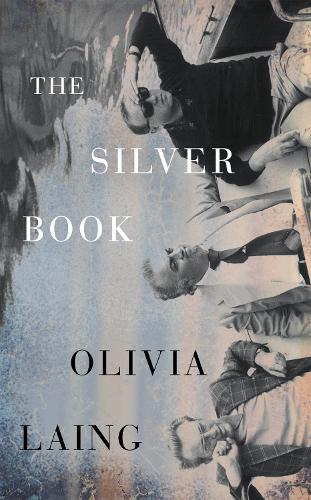
The Silver Book
Fiction, General Fiction
Olivia Laing (author)
Hardback Published on: 06/11/2025
Price: £20.00