

Reviews: The Illusionist (1)
“Brings the art of wartime deception vividly to the page”
(Hardback)
This is an account of Dudley Clarke’s wartime exploits and the use of deception in the theatre of war that he was instrumental in developing. I will cover the awkward part first and get it out of the way. Not too many people would have heard of Clarke until the 2020’s and then it would be for one strange incident. In October 1941 in Madrid, Clarke was arrested dressed as a woman, even down to wearing a bra, which is hardly the most opportune thing for somebody working in clandestine operations. As the book sets out there have been several theories put forward and Clarke himself came up with more than one explanation, but it has never been adequately explained. As a result, he has been portrayed, even written off by some, as an oddball crossdresser and a figure of fun. This is something of a shame because as the book sets out, he was a formidable character, a high achiever who did as much as anyone to hasten the end of the war and save lives. He also came up with the idea of commandos and played a role in creating the SAS (Special Air Service) making for an incredible CV. Saving lives became something of a personal mantra, he was convinced that deception saved not only the lives of allied soldiers but also those of the enemy by removing them from the immediate battlefield. A measure of this success would be the German soldiers occupying Norway in large numbers right up the final days of the war, waiting for an invasion they were convinced was coming but never did.
Clarke’s uncle was something of a magician and the author, in a clever bit of writing has included descriptions of how magicians, conjurers and illusionists carry out their feats of magic and relate these to the activities described in the chapters. This helps the reader draw comparisons and see how they use distraction and how they work to draw the audience’s attention to exactly where they want when they want. Clarke and his men managed to achieve this on an epic scale, confusing and misdirecting the enemy to great effect.
The main thrust of the book is the deception work carried out by Clarke and his team, which is best left to the detail in within the pages, though I will give a brief overview. Clarke’s approach was to play a long game, leaking snippets of information, giving false clues and allowing the enemy intelligence service to piece the puzzle together. That way they believed they were being clever whilst they were being misdirected. So enjoy the descriptions of the fake tanks, dummy airfields, non-existent armies, stage props and development of camouflage, it is a fascinating account of just how inventive man can be when conditions require it. At this point in the war the allies were losing and struggling to stay fighting, being woefully equipped and ill-prepared for modern warfare.
Clarke was a fascinating, complex man who it seems few people really got a handle on. He joined the army but was disappointed not to see action in the first war, though did see time in the middle east under Palestine mandate. He seemed in his element in places like Cairo and Constantinople (Istanbul) where he could be one of the men scheming in the shadows and then enjoying the nightlife, an existence that could have come from the pen of Eric Ambler, though at times it was more like that of Evelyn Waugh’s hero William Boot in Scoop. He loved the cinema and sought to capture some of its magic in what he did, so the chance to work with David Niven and Douglas Fairbanks Jnr were not to be passed up. He was an inveterate name dropper, so his reports were peppered with David and Douglas whereas others made do with only their surnames. Beautiful women were drawn to him like moths to a flame, but it appears he was no lady’s man. More likely they knew they would have a great time and feel safe and unmolested in his company. In short probably nobody truly understood the man, making him almost a fictional character. Sadly, his attempts at fiction writing never bore fruit and his life in civvy street never quite reached his wartime peaks.
The author has done a brilliant job in using newly released documents to painting a vivid picture of a complex, intelligent and creative man and his achievements in such an accessible way. This is a world away from the dusty history books of the past. In doing so he has also dispelled a few myths, most notable the idea that men like Clarke were not supported by the generals. In fact, it seems quite the opposite, they merely needed convincing of the effectiveness of what were on the face of these madcap ideas. Resources were short and what they had needed to be used effectively. There is perhaps a little padding, Clarke had little to do with Operation Mincemeat, which is widely written about, but it does show there was rivalry and different approaches to the wider task.
Page of 1
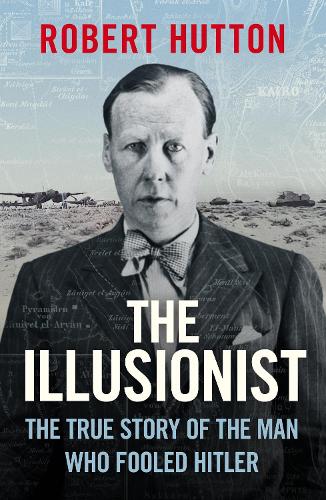
The Illusionist: The True Story of the Man Who Fooled Hitler
Non-Fiction, History , Military History , Second World War
Robert Hutton (author)
Paperback Published on: 24/04/2025
Price: £12.99