

Reviews: Smoke (8)
“interesting concept! ”
(Hardback)
Loved it!
“Brilliant. Cannot recommend this enough. Lovers of Philip Pullman have a new God.”
(Hardback)
Yet again, I have found my new favourite book. A gripping story, complex characters and a world rich with ideas.
What would a world be like where all your sins are laid bare and you are judged by the smoking gun you carry within you everywhere? Judged for sins you have not committed, for desires you never act on. A world in which even an impure thought is betrayed by your own body, seeping from your pores, staining your clothes with Soot and infecting those around you in a Smoke of your own making. A world where teenage boys fear retribution if their sheets are stained with Soot in the morning because of what they dreamt the night before? In “Smoke”, this is the reality for Dan Vyleta’s characters. Like our sweat glands responding to fear, anger or excitement, so do his characters produce Smoke. His world is wreathed in the so-called Smoke: the physical manifestation of sin. But if one Smokes when one feels love, lust, pain, is it really as simple as that?
Vyleta’s is a world that could have been. He takes Victorian London, bathed in a different kind of smoke than existed in the Industrial Revolution of our familiar history. A symptom of change and development is transformed into a cause of social and political stagnation in the novel. Everyone believes that Smoke is caused by sin, and that belief breeds fear and separation. The elites of society are the clean ones; taught control from a young age, they appear smokeless. The city of London, on the other hand, filled with common people and common dirty desires, is a well of sin, of Smoke. The gentry therefore appear pure and reasonable, while the commoners are dirty and sinful. But underground, in the mines and the sewers, there are those who speak of revolution.
It is a simple and elegant metaphor which Vyleta extends into a complete landscape, so familiar and yet so altered by this one change. Moral systems warped but still recognisable as our own; a fantasy that rings with truth and is therefore all the more unsettling.
“Power … is underwritten by morality. Those who rule, rule because they are better people than their subjects. It’s written on our linen. It cannot be denied.”
The novel is written in the present tense which I really enjoyed, bringing urgency and reality to the narrative. Vyleta also uses an ensemble style of narration, periodically inhabiting different characters. It’s a great way of not only building tension and helping to the move the story from a variety of different directions, but also ensures the reader gets a full understanding of the world Vyleta has created. He covers all the social strata, reinforcing the significance of the moral function of Smoke as it transfers to the social and political landscape. A miner’s wife, a headmaster, a noblewoman, a drunk priest, a righteous revolutionary, a butler, a teenage girl, a murderous schoolboy.
Dan Vyleta must be a man with an amazing ability to empathise with all kinds of people. He completely embraces the complexity of his characters with an honesty that is acutely felt, existing as they do in a world of moral confusion. What is most striking is the ease with which Vyleta slips into each body. At times, he conveys concise and acute spasms of emotion that sound with absolute clarity. Emotions that are meaty and guttural, but also tender, embarrassing and secret. He embraces the humanity of emotions we are ourselves ashamed of and removes that shame by putting them into simple, unapologetic terms. And that is perhaps the blessing that follows the curse of Smoke. It confronts us with our own intentions and asks us to reckon them, but also to share them and find solace in each other.
“Smoke”, besides being a wonderful read, is a book that raises questions. It highlights truths about the society we live in today and about the social landscape we have fashioned from the roots of our moral beliefs. It also highlights the fragility of those beliefs, warning against damaging absolutism; looking for the greys, not just black and white.
One of my favourite things about the book is the fact that it leaves the reader with a lot of questions unanswered. I like this aspect because it stays true to the book’s themes: questions of morality have no easy answers. This novel is a great example of leaving the reader wanting more without infuriating the reader with an abundance of loose ends. I can enjoy the invite to speculate. It also means that Vyleta has completely avoided being preachy in spite of his moral subject matter.
Vyleta achieves the ultimate: makes his reader think and imagine in equal measure. And we are made to think not by force of opinion or clunking pointed dialogue, but by favour of the narrative that wills itself into existence within the minds of its creators. As Vyleta says in his afterword to the novel, “to the reader belongs that greatest act of creation where stories are concerned, the transformation of words and sentences into tentative meaning, forever on the move.”
“Brilliant. Cannot recommend this enough. Lovers of Philip Pullman have a new God.”
(Paperback)
For the fourth time this year, I have found my new favourite book. A gripping story, complex characters and a world rich with ideas.
What would a world be like where all your sins are laid bare and you are judged by the smoking gun you carry within you everywhere? Judged for sins you have not committed, for desires you never act on. A world in which even an impure thought is betrayed by your own body, seeping from your pores, staining your clothes with Soot and infecting those around you in a Smoke of your own making. A world where teenage boys fear retribution if their sheets are stained with Soot in the morning because of what they dreamt the night before? In “Smoke”, this is the reality for Dan Vyleta’s characters. Like our sweat glands responding to fear, anger or excitement, so do his characters produce Smoke.
His world is wreathed in the so-called Smoke: the physical manifestation of sin. But if one Smokes when one feels love, lust, pain, is it really as simple as that?
Vyleta’s is a world that could have been. He takes Victorian London, bathed in a different kind of smoke than existed in the Industrial Revolution of our familiar history. A symptom of change and development is transformed into a cause of social and political stagnation in the novel. Everyone believes that Smoke is caused by sin, and that belief breeds fear and separation. The elites of society are the clean ones; taught control from a young age, they appear smokeless. The city of London, on the other hand, filled with common people and common dirty desires, is a well of sin, of Smoke. The gentry therefore appear pure and reasonable, while the commoners are dirty and sinful. But underground, in the mines and the sewers, there are those who speak of revolution.
It is a simple and elegant metaphor which Vyleta extends into a complete landscape, so familiar and yet so altered by this one change. Moral systems warped but still recognisable as our own; a fantasy that rings with truth and is therefore all the more unsettling.
“Power … is underwritten by morality. Those who rule, rule because they are better people than their subjects. It’s written on our linen. It cannot be denied.”
The novel is written in the present tense which I really enjoyed, bringing urgency and reality to the narrative. Vyleta also uses an ensemble style of narration, periodically inhabiting different characters. It’s a great way of not only building tension and helping to the move the story from a variety of different directions, but also ensures the reader gets a full understanding of the world Vyleta has created. He covers all the social strata, reinforcing the significance of the moral function of Smoke as it transfers to the social and political landscape. A miner’s wife, a headmaster, a noblewoman, a drunk priest, a righteous revolutionary, a butler, a teenage girl, a murderous schoolboy.
Dan Vyleta must be a man with an amazing ability to empathise with all kinds of people. He completely embraces the complexity of his characters with an honesty that is acutely felt, existing as they do in a world of moral confusion. What is most striking is the ease with which Vyleta slips into each body. At times, he conveys concise and acute spasms of emotion that sound with absolute clarity. Emotions that are meaty and guttural, but also tender, embarrassing and secret. He embraces the humanity of emotions we are ourselves ashamed of and removes that shame by putting them into simple, unapologetic terms. And that is perhaps the blessing that follows the curse of Smoke. It confronts us with our own intentions and asks us to reckon them, but also to share them and find solace in each other.
“Smoke”, besides being a wonderful read, is a book that raises questions. It highlights truths about the society we live in today and about the social landscape we have fashioned from the roots of our moral beliefs. It also highlights the fragility of those beliefs, warning against damaging absolutism; looking for the greys, not just black and white.
One of my favourite things about the book is the fact that it leaves the reader with a lot of questions unanswered. I like this aspect because it stays true to the book’s themes: questions of morality have no easy answers. This novel is a great example of leaving the reader wanting more without infuriating the reader with an abundance of loose ends. I can enjoy the invite to speculate. It also means that Vyleta has completely avoided being preachy in spite of his moral subject matter.
Vyleta achieves the ultimate: makes his reader think and imagine in equal measure. And we are made to think not by force of opinion or clunking pointed dialogue, but by favour of the narrative that wills itself into existence within the minds of its creators. As Vyleta says in his afterword to the novel, “to the reader belongs that greatest act of creation where stories are concerned, the transformation of words and sentences into tentative meaning, forever on the move.”
“Brilliant. Cannot recommend this enough. Lovers of Philip Pullman have a new God.”
(Hardback)
For the fourth time this year, I have found my new favourite book. A gripping story, complex characters and a world rich with ideas.
What would a world be like where all your sins are laid bare and you are judged by the smoking gun you carry within you everywhere? Judged for sins you have not committed, for desires you never act on. A world in which even an impure thought is betrayed by your own body, seeping from your pores, staining your clothes with Soot and infecting those around you in a Smoke of your own making. A world where teenage boys fear retribution if their sheets are stained with Soot in the morning because of what they dreamt the night before? In “Smoke”, this is the reality for Dan Vyleta’s characters. Like our sweat glands responding to fear, anger or excitement, so do his characters produce Smoke.
His world is wreathed in the so-called Smoke: the physical manifestation of sin. But if one Smokes when one feels love, lust, pain, is it really as simple as that?
Vyleta’s is a world that could have been. He takes Victorian London, bathed in a different kind of smoke than existed in the Industrial Revolution of our familiar history. A symptom of change and development is transformed into a cause of social and political stagnation in the novel. Everyone believes that Smoke is caused by sin, and that belief breeds fear and separation. The elites of society are the clean ones; taught control from a young age, they appear smokeless. The city of London, on the other hand, filled with common people and common dirty desires, is a well of sin, of Smoke. The gentry therefore appear pure and reasonable, while the commoners are dirty and sinful. But underground, in the mines and the sewers, there are those who speak of revolution.
It is a simple and elegant metaphor which Vyleta extends into a complete landscape, so familiar and yet so altered by this one change. Moral systems warped but still recognisable as our own; a fantasy that rings with truth and is therefore all the more unsettling.
“Power … is underwritten by morality. Those who rule, rule because they are better people than their subjects. It’s written on our linen. It cannot be denied.”
The novel is written in the present tense which I really enjoyed, bringing urgency and reality to the narrative. Vyleta also uses an ensemble style of narration, periodically inhabiting different characters. It’s a great way of not only building tension and helping to the move the story from a variety of different directions, but also ensures the reader gets a full understanding of the world Vyleta has created. He covers all the social strata, reinforcing the significance of the moral function of Smoke as it transfers to the social and political landscape. A miner’s wife, a headmaster, a noblewoman, a drunk priest, a righteous revolutionary, a butler, a teenage girl, a murderous schoolboy.
Dan Vyleta must be a man with an amazing ability to empathise with all kinds of people. He completely embraces the complexity of his characters with an honesty that is acutely felt, existing as they do in a world of moral confusion. What is most striking is the ease with which Vyleta slips into each body. At times, he conveys concise and acute spasms of emotion that sound with absolute clarity. Emotions that are meaty and guttural, but also tender, embarrassing and secret. He embraces the humanity of emotions we are ourselves ashamed of and removes that shame by putting them into simple, unapologetic terms. And that is perhaps the blessing that follows the curse of Smoke. It confronts us with our own intentions and asks us to reckon them, but also to share them and find solace in each other.
“Smoke”, besides being a wonderful read, is a book that raises questions. It highlights truths about the society we live in today and about the social landscape we have fashioned from the roots of our moral beliefs. It also highlights the fragility of those beliefs, warning against damaging absolutism; looking for the greys, not just black and white.
One of my favourite things about the book is the fact that it leaves the reader with a lot of questions unanswered. I like this aspect because it stays true to the book’s themes: questions of morality have no easy answers. This novel is a great example of leaving the reader wanting more without infuriating the reader with an abundance of loose ends. I can enjoy the invite to speculate. It also means that Vyleta has completely avoided being preachy in spite of his moral subject matter.
Vyleta achieves the ultimate: makes his reader think and imagine in equal measure. And we are made to think not by force of opinion or clunking pointed dialogue, but by favour of the narrative that wills itself into existence within the minds of its creators. As Vyleta says in his afterword to the novel, “to the reader belongs that greatest act of creation where stories are concerned, the transformation of words and sentences into tentative meaning, forever on the move.”
“A rich, intriguing tale”
(Hardback)
Smoke is such a rich, sumptuous story set in Dickensian England. It's a coming of age story, a mystery, a dystopia and a high rollicking adventure all wrapped up in one book. But what's it about?
In Smoke we meet Thomas and Charlie in their posh, well-to-do boarding school. The world they face isn't quite how you would expect. In this inventive novel, people smoke as a sign of sinful thoughts or deeds. Lying, stealing, dirty thoughts and the like can all set you smoking. The upper classes are expected to master themselves to keep from smoking whilst the working class, especially those in sin-filled London, smoke shamelessly. A brilliant concept but that's only the beginning. Thomas and Charlie have many more miles to travel before the end.
It's a delicious read - the language and style seem true to the Victorian era - a real pleasure. The story was well thought out though I found the end a bit more convoluted than was necessary. No matter, Smoke proved to be a jolly good read regardless. I've not read any of Mr. Vyleta's previous works but I will certainly have a look. This is one author I'm so pleased to have found!
Page of 2
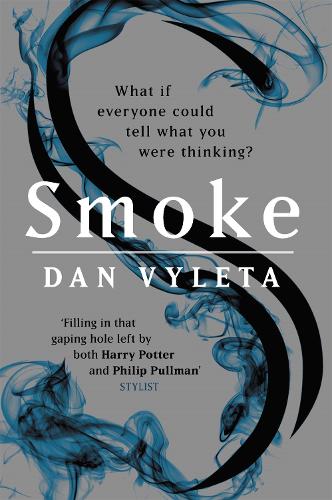
Smoke: Imagine a world in which every bad thought you had was made visible…
Fiction, General Fiction, Science Fiction, Fantasy & Horror , Science Fiction & Fantasy
Dan Vyleta (author)
Paperback Published on: 06/04/2017
Price: £10.99