

Reviews: Second Place (12)
“Complex, beautiful, striking.”
(Hardback)
This novel is deceptively short and deceptively simple, luring you in with a series of letters from our narrator to a character we never quite meet.
The letters seem to get progressively desperate, confused and outraged, as we are led through a story where the characters and their relationships are stretched and made more tense.
Without spoiling it, there is a character whose spite and anger towards the end of the book feels visceral and quite unsettling, and it’s well handled.
My first book by Cusk, and, judging by this book, I doubt it’ll be my last.
I received an advanced copy of this book from NetGalley in exchange for an honest review.
“Really extraordinary writing.”
(Hardback)
Stream of consciousness books are often not easy to read, but after a rather slow start whilst the narrator introduced herself and set the scene, this just became more and more engrossing. It is peopled by extraordinarily diverse characters - the fragile narrator herself, her gentle giant of a husband, whose waters run very deep, her daughter who really comes of age as the book goes on, and ‘L’ the brilliant but narcissistic and brutal artist who begins as the narrator’s hero and becomes her nemesis as the story progresses. Only two other characters complete the cast, along with the landscape where the story is set, which is a character in itself. The book explores themes of love, loss, redemption, obsession, sense of place, duty and in its stunningly beautiful writing leaves the reader waking up from an almost dreamlike state at the end. Really extraordinary writing and well worth persevering with in spite of the slow start.Many thanks to NetGalley and Faber & Faber amainEdition for my review copy.
“A Great Read.”
(Hardback)
This story is told in the form of correspondence to Jeffers, from a fragile and disillusioned 'M'. M and her second husband have built a second home on their land which is referred to throughout the book as the 'Second Place'. They rent it out to artists and writers who love it's tranquil setting and breathtaking surroundings. M's relationship with her husband is quite complex. She finds herself fixating on an art display she viewed in Paris many, many years ago and writes to the artist 'L' inviting him to stay and work in the 'Second Place'.
Second Place refers to the cottage used as a second place but as the story progresses, it becomes apparent that second place is the way that M sees herself in her life.
The narcassistic L does come to stay and spend time in Second Place and the story develops more layers than an onion.
This is a very deep book and it promotes food for thought. I struggled a bit with it at the beginning but am so glad I stuck with it. A great read I recommend.
“Like a strange and elegiac dream”
(Paperback)
A woman going through a crisis sees a series of works by a painter in a Paris gallery and it changes her life. In the new life she makes, she creates a space for art and artists, dreaming that one day, her painter will come and change her life again. Years later he does, but not in the way that she imagines. This is a sparse, strange novel about love and desire, power and art and a strange kind of violence. As weird and beautiful as the marshlands that the action of the book plays out against, this is like reading about a strange dream.
“In the annexe plenty of people can hear you scream”
(Hardback)
Rachel Cusk has a long history of asking the reader ‘how much of this is true? How much is my experience? Or are you just projecting all this onto an image of me?’ Whereas in Outline the authorial/autobiographical figure was only a listener, here the damaged writer M is an obsessively reflective and discursive narrator, sifting life’s events over and over for significance. If the narrator in Outline was present only indirectly, here everything is directly narrated by M in the form of a confessional to the undescribed listener Jeffers. After a brief prologue summarising a disastrous first marriage and a curtailed writing career, the story proper starts in a marshland retreat which M now shares with second husband Tony, returning adult daughter Justine, and Justine’s boyfried. Enter the apple-cart upsetter L, a famous painter who M. invites to stay. His arrival, with glamorous girlfriend Brett, to reside in the ‘second place’ - an annexe to their main house, prompts shifts in the power dynamics between the three couples.
The pleasures of this book are many: her sharp descriptions of the weather and landscape; and her focus on the idea of ‘second place’. In art L’s global art career is contrasted with M’s second-place literary endeavours. In relationships hers with the ‘ugly’ but kind Tony is set against L’s with the glamorous and sociable Brett. There’s even a generational ‘second place’ as M cedes ground to her grown-up daughter. The heart of the novel for me is this analysis of the human desire to compete,rate and place and how difficult it can be to create relationships not based on this. This, together with the quality of her prose, is reason enough to recommend this.
Both the start and the end are weaker sections of the book, when another layer to the writing appears, that it is not autofiction at all but a rewriting of a book written by American socialite Mabel Luhan about DH Lawrence’s stay at an artists colony in New Mexico. At its best Cusk’s control of the characters and their interactions are strong enough for this to recede into the background as source material.
Page of 3
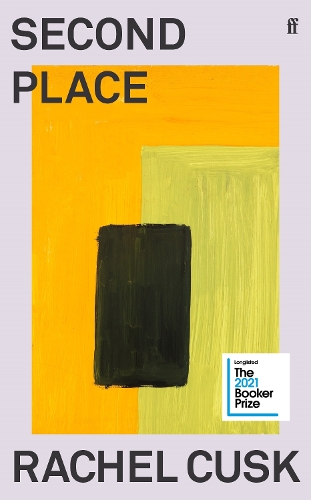
Second Place
Fiction, General Fiction
Rachel Cusk (author)
Hardback Published on: 06/05/2021
Price: £14.99