

Reviews: Rewilding (3)
“The principles, arguments and ethics of rewilding”
(Paperback)
Rewilding: the Radical New Science of Ecological Recovery covers the history of re-wilding, bringing us to the current day with case studies in the Netherlands, Wales and Yellowstone Park in the United States, and provides a roadmap for the future.
In the process, Jepson and Blythe cover evolutionary biology, ecology, political issues and various theories of rewilding in an unbiased, accessible and informed way. Natural and systems approaches are assessed, drawing on recent research and innovations such as the wildlife economy model in South Africa, de-domestication and wildlife banks.
My thanks to NetGalley and Icon Books for the ARC.
“Rewilding as a concept feels like it can be a vital source of positivity in dark times.”
(Paperback)
As we live in the midst of a climate catastrophe it can be hard to find hope, but we must. Rewilding as a concept feels like it can be a vital source of positivity in dark times. It seems to hold not only a potential way to help repair the damage of our past actions, but also a way to transform our future relationship with the natural world and that is exciting.
My first introduction to rewilding was through Isabella Tree’s book Wilding, which chronicled the experiences of Isabella and her husband, Charles Burrell, as they sought an alternative to the failing intensive farming of their familial estate at Knepp in Sussex. Wilding goes deeply into the experiment at Knepp and the results that they have observed, whereas Rewilding is a broader discussion of the science and developments around the world.
I would highly recommend both books for these reasons. Wilding is great for providing inspiration and hope around the dynamic changes that take place when humans remove themselves, or considerably reduce their involvement, in land management and let nature have its way. Rewidling opens up the much wider opportunities that exist across the world to transform what we think of as the natural environment, but which is really just a shadow of what once was, before we started impacting it.
What I find exciting about rewilding, apart from the opportunities for resurrection in our natural world, is the way that it changes the way that we think about the world around us. For example, one criticism of rewilding is that it can lead to de-domesticated fauna dying in their environment, such as cattle dying from the cold, in ways that are considered inhumane and should not be allowed. This highlights both our arrogant relationship with nature and also our hypocrisy given the many cruel deaths (and lives) we happily inflict on such animals to provide cheap food.
Maybe we don’t need to just re-wild our landscape but also ourselves, to find a more natural space in which to exist away from our plastic wrapped food and constantly fluttering screens. There are a number of ethical and practical challenges as we move down the path of rewilding and the book does well to bring these forwards and seek debate, so that buy-in can be achieved and the issues can be navigated in a thoughtful and considered way.
As the notion and language of wilding permeates out day to day culture, even in my semi-rural corner of Nottinghamshire we talk about rewilding gardens and public spaces, this is an excellent book to broaden understanding of both the threats and opportunities. On the one hand we are faced with a disaster that is largely of our own making and yet on the other we have an incredible opportunity to reposition ourselves into a more humble but deeply satisfying place in the world.
“A Comprehensive Guide to the newest Buzzword in the Conservation sector”
(Paperback)
From the perspective of someone studying in this field (Animal Management with a potential career in Conservation) this book was a refreshingly new perspective on the issues that we are facing today in regard to ecosystem degradation and biodiversity loss. I will definitely be recommending my college library adds a copy of this book to their shelves as it is well researched, logically structured and overall, very thought provoking.
I think it is important to note that I do have experience when it comes to this topic area and have somewhat of a basis of knowledge that helped me to consume this book fully. I therefor would say that this may not be the best starting point if you are looking to research into rewilding as a topic, as whilst it is comprehensive it can be overwhelming and complex at some points.
That being said I really enjoyed this book and highlighted many sections that I cannot wait to discuss with friends and peers, as I can definitely see it opening up a lot of interesting conversations. It is hopeful in essence, whilst being realistic which is something, I think the sector is severely lacking.
Rewilding has prompted me to stay engaged with projects and inspired me to explore unconventional non linear thought processes in a way I am not sure I would have if I hadn’t have read it.
Page of 1
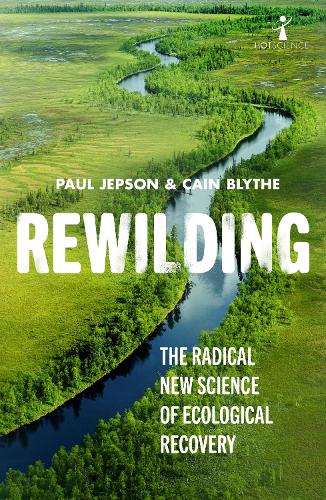
Rewilding: The Radical New Science of Ecological Recovery
Non-Fiction, Language & Reference, Science, Study & Work, Popular Science
Cain Blythe (author) , Paul Jepson (author)
Paperback Published on: 23/07/2020
Price: £10.99