

Reviews: Outrageous! (3)
“Accessible, informative and inspiring!”
(Paperback)
Let’s go queer history! In this part-memoir, part-historical deep-dive, Baker explores the story of Section 28 (the ’88 law that stifled LGBT education in Britain) and our journey towards repealing the law in the following years. This journey includes interviews with legendary LGBTQ+ activists, transcriptions from politicians during debates and a plethora of press articles, images and campaigns that shaped the way the public viewed the protests. I loved Baker’s approach to this topic, he leaves no research-shaped stone unturned while never shying away from getting personal about this formative time in our recent history.
“Wonderfully written”
(Hardback)
Really important and immensely readable history of Section 28 legislation designed to stop the 'promotion' of homosexuality and the normalisation of 'pretended' LGBT families. The book is well written, the research is thorough without being dry, the authors writing style is engaging as well as informative. I also really liked that the author was inclusive, including stories of how HIV education was being stopped, as well as lesbians who were under increased risk of losing their children in custody battles, to the formation of Stonewall and OutRage!. As someone who lived through those times, it was useful to remember just what it was like to be queer in Thatcher's UK, (very much like what it is to be Trans in today's UK). So much has changed in a short period of time it's easy to focus on that but this book is a vital reminder of understanding where we have come from and what we have survived as a community. Highly recommended.
“A timely history of Section 28”
(Hardback)
Outrageous! The story of Section 28 and Britain’s battle for LGBT education by Paul Baker manages to be both a detailed history of the notorious, homophobic legislation and a memoir that is often very funny, recounting how the author grew up under what, before being passed into law, was Clause 28.
It was a badly drafted clause in the Local Government Act in 1988, banning local authorities – which have responsibility for local state schools – from ‘promoting’ homosexuality and the “acceptability of homosexuality as a pretended family relationship”.
That ‘promoting’ bit was a major difficulty – did acknowledging homosexuality exists equate with ‘promotion’? If you played pupils a bit of Tchaikovsky, would that amount to ‘promotion’?
Then of course, there was the whole idea that an LGBT relationship was a ‘pretend’ one. Baker points out that the pace of social change since the 1960s – decriminalisation of homosexuality (albeit with strictures in place) only came in 1967 – had left many older people struggling in such a rapidly shifting landscape and in what many saw as ‘the permissive society’.
The process of how something comes to be on the statue book is explained in a good bit of civics showing how the Westminster Parliament works in terms of both houses.
Baker uses interviews with key figures, including Sir Ian McKellen, Angela Mason and Lord Chris Smith, to recount what happened, together with many quotes from speakers in both the House of Commons and the Lords when the subject was being debated.
Many of those quotes still have the power to shock now, with their brazen and even violent hatred. The usual names come up – Mary Whitehouse, Lord Longford, Malcolm Muggeridge … together with ones that will be less well known to the wider audience, such as Dame Elaine Kellett-Bowman, who was Baker’s MP when he went to work at Lancaster University, and mine too when I lived in that area.
She was a sort of handbagging Margaret Thatcher clone on ’roids – a deeply unpleasant woman that I personally had contact with when writing to her in the 1980s about Campaign for the Arts. It might have been a non-party campaign, but that didn’t stop her snotty reply effectively accusing me of being a ‘loony lefty’. I was barely getting over having started my political life, courtesy of my background, as a Tory, but she helped me further along that road.
Baker takes great care to be as understanding as possible of the motives of many who so strongly backed Section 28 and never falls into the easy trap of simply lambasting him, though is less obviously forgiving of their friends in the media who peddled a diet of hate to their readers.
But central to the book are the stories of those whose lives were negatively affected by Section 28 and the homophobia that it enabled. It had a lasting impact for many.
However, brought together disparate parts of the LGBT community to fight back against and, in the process, build the case – and support for – greater equality, with a campaign including some incredibly inventive, non-violent protests.
Following the repeal of the clause in devolved Scotland in 2000, it finally came off the books elsewhere in 2003.
Reading this today feels like having a premonition.
Toward the end of Outrageous! Baker says that “Tristan Garel-Jones, the deputy chief whip for the Conservatives, apparently called it [Section 28], a piece of meat thrown by Mrs Thatcher to her right-wing wolves”.
I finished the book the same day on which reports leaked out that Tory Party leadership frontrunner Liz Truss had said – according to her supporter and former party leader Iain Duncan Smith – that she regretted her involvement in the Bill to ban conversion ‘therapy’.
Other reports have suggested that, if elected as Tory leader (and thus prime minister), Truss would also elevate the culture war loving, LGBT+ disliking Kemi Badenoch to her front bench.
Presumably this was to appeal to the readers of the likes of the homophobic – and deeply transphobic – Daily Mail and Daily Telegraph.
Together with the Sun, they nhave been cited as the biggest news media defenders of Section 28.
Also in August, Suella Braverman, the then attorney general, stated that schools that talk about gender change could face Ofsted sanctions. Nothing like Section 28 at all, then.
It’s difficult not to feel deeply concerned about what the coming period will bring in terms of equality and for the LGBT+ community. Or not to feel that, once again, campaigns and protests might need to be organised.
Baker’s book is a salutary reminder of the harm of such intolerance – but also of how the fight back can succeed. It is very much worth a read.
Page of 1
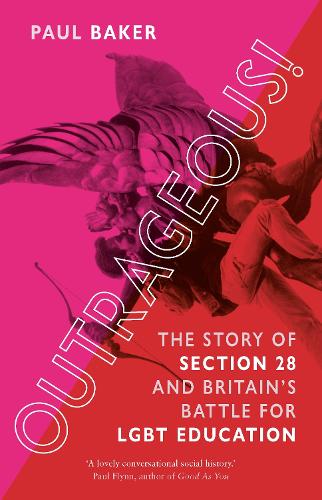
Outrageous!: The Story of Section 28 and Britain’s Battle for LGBT Education
Non-Fiction, History , British History, 20th Century Britain, General History
Paul Baker (author)
Paperback Published on: 01/02/2023
Price: £12.99