

Reviews: Number 11 (6)
“Story of our times....”
(Hardback)
Jonathan Coe's new novel is a wonderful comedy about the changes in our social life and how media effects and manipulates the lives of ordinary people. It has great characters and a tragicomic story told and woven through their eyes. This brilliantly written novel definitely makes you think, challenges you and overall leaves you with a totally unexpected ending.
I would definitely recommend this to anybody who wants to read about the changing of our times.
“Great fun”
(Hardback)
After the excellent ‘Rotter’s Club’, set in the 1970s and ‘The Closed Circle’, set during the rise of New Labour, Jonathan Coe now turns his gaze to contemporary Britain.
This novel features a colourful cast of characters whose stories are loosely connected: university graduates, game-show victims, post-modern detectives, the super-rich. Everyone is trying to find a way through the ever-confusing Britain of today, where the class system is regressing into Victorian times, while modern technology delivers new challenges.
There are some references to Coe’s previous book “What a Carve Up”, which is set in the 1980s (which you don’t have to have read to enjoy this one). The terrible Winshaw family still casts a long shadow and has their fingers in many an unpleasant and lucrative pie. But this story is a snapshot of our times and there are plenty of references to topical headlines. While I personally feel, that Coe has perhaps shoehorned a few too many issues into this book, it is nevertheless great fun to read, a delicious satire with some tender moments.
“Very Coe Book!”
(Paperback)
The book is set to show some of the inequalities that are present in society, and how important your position can be. The book follows a number of characters who have loosely connected stories, and how they are affected differently by the people around them. I'm always a fan of books where the main characters are influencing each others interconnected lives, without even realising. The other thing this book does is shows how important the perspective is, with a bit of a spotlight on reality TV and tabloid journalism (which I am always pleased to see being called out). There are reference to other Jonathan Coe Books, particularly What A Carve Up! - but I hadn't read that before this, and wasn't confused or lost at all. There area couple of quite time specific references, but more than enough still rings very true now. It does get a bit weird towards the end, but I think it's worth it!
“Nice Journey - Not Sure About the Destination”
(Paperback)
The writing here is as engaging as I have come to expect from Coe - I’ve read some but no means all of his - and the way that he links the various character narratives is again impressive.
I’m not sure how persistent the cultural references will be, but certainly it’s all still readable and resonant in 2020 - and the key test of building empathy with the characters was easily passed for me.
I did feel though that, having set all this up, Coe himself wasn’t sure how to end this book. I won’t give details, but the path he chose was somewhat surprising and, for me, a bit of a cop-out in terms of real-world resolution. Maybe it was some kind of subtle allegory which passed me by - but I could think of other ways that would be less jarring.
Not as satisfying as What A Carve Up, ultimately.
“Disappointing. A victim of its own style. Lame sequel to "What a Carve Up!"”
(Paperback)
I picked up Number 11 with a great deal of hope. I put down the book with disappointment.
I read Jonathan Coe’s novel, What a Carve Up! while studying at university a couple of years ago. It was an excellent book – not to mention it lead to an essay worthy of a 1st (it got 2:1, but I’m not bitter or anything…) – so I didn’t need much encouragement in reading another of Coe’s titles. I was unaware when I started reading that Number 11 features a great deal of narrative strands connecting it with his previous novel, What a Carve Up! (WACU). The wealthy and loathsome Winshaw family, who meet a gruesome end in WACU, have some grandchildren and extended family members yet to be culled. Number 11 appears to be Coe’s way of tying up these loose ends.
I have not read any other Coe novels, but his tendency to be self-referential is known, and as such I cannot be certain if “Number 11” is intended as a sequel to WACU, or if he is just sticking to his regular habits by reusing character names and referencing his own work. Even if it is a sequel, “Number 11” can certainly be read independently, you’ll just miss out of the occasional giggle when something familiar pops up.
In any case, I can only judge from what I have read myself, and what I think is this: Number 11 is a lazy sequel to What a Carve Up!. Before, there were fantastically clever twists and turns, infuriating but exacting use of metafiction; all leading to a tumultuous and harrowing conclusion which looked into the very soul of modern classism and cultural degradation. And now? Some lame attempts at self-referencing and unrevealing examples of contemporary British existence. Snapchat, “I’m a Celebrity” and the Bedroom Tax.
These contemporary examples are presented in much the same way as his previous work: individual stories, each taking on a different issue, appearing disparate, but eventually pulling together for the dramatic conclusion. I knew a dramatic conclusion was on the way – or at least I was hoping and expecting a dramatic conclusion. I cannot hide my disappointment. The narrative strands did not tie together with anywhere near the potency that I had come to expect from WACU.
It is of course a symptom of the times and of his chosen subject – socio-political satire – that many of the references feel outdated, despite being first published in 2015. However, it might be that the topics are too recently outdated, thus appearing even more so. This sounds confusing, but let me explain: something is only outdated until it becomes historical.
I read What a Carve Up! in 2014, having been originally published in 1994, the novel itself being set in the 1980’s. Twenty years down the line, I was reading this novel and finding its political satire more relevant, in a historical context. With this in mind, it is feasible that this new novel, Number 11, will become more readable to those not so present in the social landscape it refers to.
Number 11 is a novel that is victim to its own essential quality of being “current”. It was current in 2014, it is not relevant in 2016; it might become significant in 2034.
Page of 2
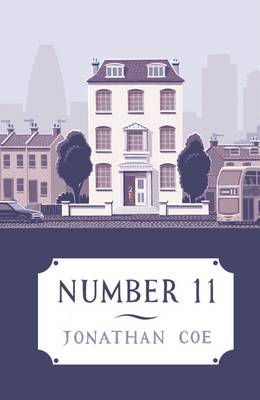
Number 11
Fiction, General Fiction
Jonathan Coe (author)
Hardback Published on: 11/11/2015
Price: £16.99