

Reviews: NeuroTribes (7)
“Worthy winner of the Samuel Johnson prize”
(Paperback)
This is a fascinating and very accessible 'history' of autism, from its first tentative indentification in the 1940's, through decades of trying to define what it is and the often awful treatment of autistic children, through to the modern day. It ends on a positive note, showing how, particularly via the internet and tech culture, people with autism are finding ways to thrive. But while there are undoubtedly eccentric geniuses out there, there are also many more people struggling to live a 'normal' life. Rather than specifically searching for a 'cure' to autism in its many forms, the author says that future is about looking for ways to get the world to accept autistics and allow them to operate in it on their terms.
This is a worthy winner of the Samuel Johnson prize, and essential reading for anyone with an autistic family member or friend, or indeed anyone with an interest in the human mind.
“Charting the history of autism, telling an untold story”
(Paperback)
Neurotribes is a truly astounding book that deserves its Samuel Johnson Prize for Non-Fiction. As someone currently investigating their own possible autism, this was truly an essential read. Rarely does work on autism focus so much on who autistic people are, and all that they have accomplished, rather tending to focus on limits of autism solely. One thing that stood out so much to me was the enormous scientific contribution to society made by autistic people, weighed against the sheer volume of bad science that has led to complete misunderstandings of the diagnosis and a focus on cures rather than provisions. Neurotribes spans the history of autism, through Asperger's and Kanner's work with autistic people, through to online support networks created by autistic people, gleefully mentioning the wonderful work of Oliver Sacks, Lorna Wing, and the representation of autistic people in the media, thanks to the film Rain Man and the works of Temple Grandin.
I wholeheartedly recommend this, especially if you work with or know autistic people.
“Neurotribes”
(Paperback)
Was expecting a lot from this book and am very pleased to say that I was not disappointed. The journalism is of the highest quality, this set of facts, will by turns make you weep with anger and give you renewed hope. If you read nothing else I in the next few months, please, please read this book. You will be rewarded with a genuine life changing experience.
“Mind-boggling”
(Paperback)
Thanks to Bunmi and Atlantic Books for the review copy.
Autism has long been of interest to me. As someone who readily identifies with 'the spectrum', I was intrigued by this Samuel Johnson Prize winner. It provides a detailed history of autism and Asperger's, and it doesn't shy away from the unpleasant side of things: the institutionalisation of children, the abusive nature of therapies. It will unsettle you, and rightly so: it's shocking stuff. But please don't think the book is all 'doom and gloom'; it's also wonderfully life-affirming and touching, with a chapter on science fiction, the internet, and fandom - as a fan of The X-Files, the show that practically invented online fandom, this especially was of interest to me - and one on Rain Man and public perceptions of autism. Most beautiful and engaging, perhaps, were the life stories of those living with autism; while facts and figures are all well and good, helping to hammer home a point, it's a human side of things that really hits home.
A thorough and mostly accessible and engaging history, though it can get bogged down in the details at times and on occasion becomes a tad too 'scientific journal' for the casual reader.
“Fascinating, wide-ranging and accessible.”
(Paperback)
I took this book from the shelf planning to just skim through as I have no personal interest in Autism but I was completely absorbed from the first chapter. Silberman explores the history of autism with real journalistic rigour and the writing is fast-paced and gripping. While he does touch upon the complicated subject of autism itself this book is much more about how doctors, parents and the media have responded to people with autism in the last 70 years and how attitudes, research and treatments have changed. It made me re-evaluate a few of my own assumptions about what it means to be neurologically "normal".
Page of 2
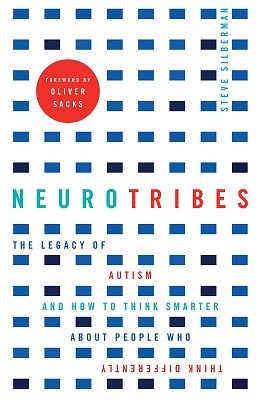
NeuroTribes: The Legacy of Autism and How to Think Smarter About People Who Think Differently
Non-Fiction, Language & Reference, Science, Study & Work, Popular Science
Steve Silberman (author) , Oliver Sacks (author of contributions)
Paperback Published on: 03/09/2015
Price: £16.99