

Reviews: Life Class (2)
“Magnificent”
(Paperback)
Paul Tarrant has nurtured his love for art and despite his working class background, has made his way to the Slade, but it's 1914 and his time there is interrupted by the outbreak of war. He is unsure of himself as an artist, but sure that he must enlist. He finds himself in Belgium, working in a field hospital. His art tutor has criticised his work and told him that he needs to find out what it is he wants to say. The war seems to unlock that knowledge, but will anyone want to look at what he depicts? Paul's attempts to realise himself both as a man and an artist are in conflict with the women he falls in love with and his relationship with Elinor, a brilliant artist who refuses to engage with the war in thought or deed and certainly not in her art, creates a tension that runs through the book, unsettling and undermining Paul as much if not more than the war. Nuanced, beautiful and sharply written, this is magnificent.
“Vivid language and description”
(Paperback)
Life Class is the first in a trilogy by Pat Barker, the author most known for her Regeneration series of novels. It is followed by Toby’s Room and culminates in the recently published Noonday.
As in Barker’s previous novels, Life Class is focused, predominantly, on the First World War. It begins prior to the war, as tensions are building in Europe, with a group of friends who attend a prestigious art school in London. When war is declared, a love triangle is dismantled. Neville volunteers as an ambulance driver and Paul as a medic close to the frontline, whilst Elinor, their love interest, continues to paint.
Barker doesn’t make light of any aspect of war; in fact, throughout, there are some heart-stopping moments that can only have been written following intense research and fact-finding. There are descriptions of injury and moments of humanity that are difficult to read, but very humbling. Barker demonstrates that she has great talent in portraying these scenes throughout her various novels.
In a different form to previous stories, Pat Barker’s initial scene-setting in an art school provokes an artistic viewpoint. Elinor, as the character most distanced from the atrocities, remains devoted to her art, painting things she loves, and refusing to encourage depictions of war in this medium. It asks the reader whether art should be what we choose to make it, or whether it should be a means of expression, even of the greatest of horrors.
Whilst I enjoyed Life Class and my interest is piqued enough to want to read the following two books, it didn’t feel as strong as stories of a similar theme. In terms of language and description, it was vivid and Barker can’t be criticised for that. The artistic aspect brought originality too, and having an observer of war, albeit a frustrating and fairly unlikeable one, brought fresh insight. However, having these two perspectives also meant some focus was lost. It meandered a little too much between characters, so that we were never fully in the war-zone or in the art school. I’m hoping that this may be addressed a little in Toby’s room, which I hope to read shortly.
Page of 1
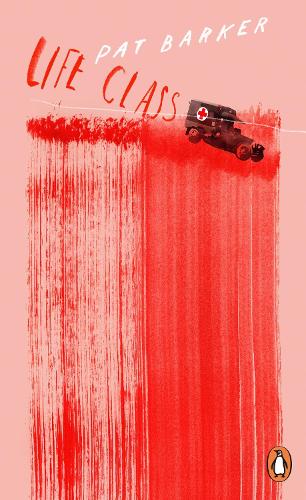
Life Class
Fiction, General Fiction
Pat Barker (author)
Paperback Published on: 06/06/2019
Price: £9.99