

Reviews: Kafkaesque (2)
“Will interest lovers of writing, language, translation, history, and Kafka (obviously)!”
(Hardback)
I’d describe Kafkaesque as a collection of essays, building on each other, some centred around a particular translator. Some of the translators were writers I was aware of - Jorge Luis Borges, Primo Levi - others I’d never heard of. In parts, it's about Kafka and his work, but against the backdrop of those who translated him, and the context of their lives. Some themes run throughout, including persecution and incarceration, as well as the definition of pokoj (a Slavic word). The latter is referred to time and again - “Pokoj means both a room (spatial, residential) and a form of tranquillity or peace (psychological).” For both Kafka and his translators, language could be a pokoj. (The nature of pokoj could be a book on its own - how to build your own, physical or otherwise, celebrities and their pokoj ;) But at the heart is the power of language and translation. One of the most powerful moments in the book for me was the role of language in the trial of Adolf Eichmann in Jerusalem, where translation between German and Hebrew became a barrier, and it was the ability of Jewish German-speaking judges to take back control of the German language from Nazism. Also, the section about the Czech journalist and writer Milena Jesenská, where translation comes from an act of love, is rather beautiful.
I don’t think I got as much out of this as others might. The jumps between Kafka’s life and that of a particular translator, as well as the frequent appearances of other characters and events, broke things up too much for me; I probably needed a simpler biography to start. However, the feel of Kafkaesque reminded me a bit of the Baillie Gifford Prize-winning Question 7, with its intertwining themes, ideas, and specific events. For anyone interested in writing, language, translation, history, and Kafka (obviously), this is worth a look.
Many thanks to the publisher for the proof copy.
“3.5/5!”
(Hardback)
Kafkaesque by Maïa Hruska is a thoughtful and quietly powerful collection that explores language, translation, and identity in a deeply layered way.
Rather than focusing solely on Franz Kafka, the book expands outward to the lives of those who translated him, including figures like Jorge Luis Borges and Primo Levi. I really enjoyed this approach, as it places Kafka within a wider cultural and historical conversation.
The recurring idea of “pokoj” is especially striking. The dual meaning, both a physical space and a sense of inner peace, becomes a powerful thread throughout, particularly in how language itself can act as a refuge.
Some of the most impactful sections are those rooted in history, such as the role of translation during the Adolf Eichmann trial. The idea of reclaiming language in the face of oppression adds real weight to the book’s themes.
At its core, this is a reflective and intelligent exploration of how words shape meaning, memory, and power. A quietly profound read that lingers in its ideas long after finishing.
3.5/5.
Read more at The Secret Book Review.
Page of 1
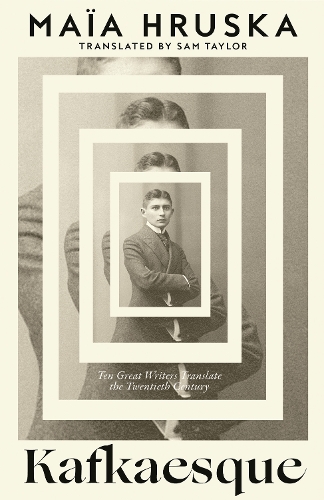
Kafkaesque: Ten Great Writers Translate the Twentieth Century
Fiction, General Fiction
Maïa Hruska (author)
Hardback Published on: 09/04/2026
Price: £16.99