

Reviews: Hidden Figures (1)
“A wonderful and necessary book”
(Paperback)
Hidden Figures ties black feminist, social and scientific history together to reveal the fascinating story of the African American women who made it possible for NASA to send an astronaut into space. Margot Lee Shetterly’s book brings history that was previously best known only to the scientific community (and residents of Hampton, Virginia) to a mainstream audience. If you’ve seen the film, trust me, you’re going to want to read the book.
In contrast to the Hidden Figures film, Shetterly’s book starts in the Second World War; beginning its story with the role African American women played in the development of America’s WWII aeroplanes. As Shetterly explains, when WWII led to a shortage of skilled male workers, industries across the country rushed to recruit women to fill their jobs. The demand for labour, and fast technical advancement, created employment opportunities for women in top organisations and in fields like mathematics. This included many African American women, whose contribution to the war effort is often absent from the popular understanding of WWII. While the history of spaceflight makes for an exciting film, Shetterly’s pages provide access to the full development of these women’s histories.
One of the heroines of Shetterly’s account is Dorothy Vaughan; an African American schoolteacher with a host of advanced qualifications in mathematics. She, along with many other women, applied for a job with the NACA (which would later become the more famous NASA) at Langley in Virginia. Dorothy was taken on as a human ‘computer’. Her job was to calculate and check the maths that informed the development of America’s fighting flying machines. The ‘computers’ fast and accurate work was crucial to America’s wartime success. Dorothy is an amazing figure, dedicated to learning and improving, and her story is worth the price of the book alone.
The African American women who join the NACA formed the West Computing Group; a segregated group of black women who inhabited a separate building to the white, female East Computing Group. Their work for the NACA was expected to be temporary. However, thanks to a combination of the women’s adaptability, hard and excellent work, and changing social situations, the women of the West Computing Group remained part of the organisation long after the war. Many of the women who began in the West Computing Group during WWII went on to play a vital part in America’s space program. These women included Katherine Goble – the lead character in the recent film. Shetterly makes Katherine’s story, which is full of advanced physics and mathematics, accessible to even the least scientifically minded. She brings out the drama of Katherine’s involvement in John Glenn’s first spaceflight without ever divorcing it from the complex nature of Katherine’s work.
Shetterly’s book follows the careers and lives of Dorothy Vaughan, Katherine Goble and Mary Jackson particularly closely. While Hidden Figures uses the lives and careers of these three women as its spine, it also details the contributions of the many other African American women, and name checks many white women, who were involved in the work of the NACA and NASA. Shetterley also emphasises the role the black women of Langley played in each other’s success. Katherine Goble is no lone exception. Her career is built on the achievements of many other black female computers. And she, in turn, is keen to help other black women reach their potential at Langley.
Hidden Figures sets the progress of these women alongside the history of the American civil rights struggle; explaining how the lives of the women in West Computing were influenced by racism and activism. Shetterly’s book often emphasises the importance of black activity in creating professional, social and legal progress for African-Americans. Shetterly credits when white colleagues, and the actions of white politicians, have a part to play in helping to advance the women of West Computing. However, she is clear that the primary driver in black success was the black community itself. The book is littered with examples of black women and men educating the next generation of African Americans to the highest standards possible, finding them jobs, sorting out places for them to stay, and welcoming them into a vibrant social world. With her strong, confident narrative Shetterly clearly demonstrates the historical importance of focusing on the black community’s activism to truly understand the history of race in America.
Shetterly deftly reveals a substantial hidden history of black, female involvement in the development of aircraft and space technology. And through her investigation into the scope of these women’s involvement she beats back simplistic historical myths about black women’s role in shaping history. There are a lot of African American women in this book; almost too many for Shetterly to fit in. After this pioneering work, it will be difficult for history to consign these women to the shadows again. Readers will be challenged to look at the full history of the space program. A wonderful and really necessary book.
Page of 1
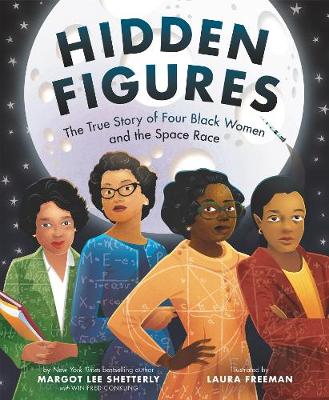
Hidden Figures: The True Story of Four Black Women and the Space Race
Childrens, Children's Reference, History
Margot Shetterly (author)
Hardback Published on: 08/03/2018
Price: £12.99