

Reviews: Hell Screen (1)
“He describes a life that exhausts the spirit, yet he does it with such precision and beauty that you can’t look away. You close the book, and the silence lingers. What else is this feeling but a token of a writer’s pen piercing your heart?”
(Hardback)
‘’Crows, on the other hand, flocked here in great numbers. During the day they would always be cawing and circling the roof’s high fish-tail ornaments. And when the sky above the gate turned red after sunset, the crows stood out against it like a scattering of sesame seeds. They came to the upper chamber of the gate to peck the flesh of the dead. Today, however, with the late hours, there were no crows to be seen.’’
To my shame, Akutagawa is a writer I wasn’t familiar with until very recently. I knew of him, obviously, and Rashōmon is a film that impressed me deeply when I first watched it (I must have been 15 or 16 at the time), but I had never had the pleasure of reading his stories. This was an oversight, as I found a writer unlike any other I’ve encountered in Japanese literature. Reading through this collection is a journey through two very different versions of Akutagawa. It begins with stories of ancient Kyoto, moral dilemmas, and gruesome crimes, fragmented pieces of a dark folklore. But as you follow the order of the book, the atmosphere shifts. The stories stop being about ‘characters’ in moments of history and start guiding the reader into the troubled soul of the writer himself. You move from the external horror of a burning carriage to the internal horror of a man losing his grip on reality.
Rashōmon: In a Kyoto plagued by a series of calamities, crows haunt the land and bodies of unfortunate people are lying everywhere, rotting, prey to the living unfortunate souls. The encounter between a wronged man and an old woman is nightmarish. A superb story, not to be confused with Kurosawa’s film.
‘’When I kill a man, I do it with my sword, but people like you don’t use swords. You gentlemen kill with your power, with your money, and sometimes just with your words: you tell people you’re doing them a favour. True, no blood flows, the man is still alive, but you’ve killed him all the same.’’
In A Bamboo Grove: The haunting story of a double crime, a rape and a murder, through the testimonies of those involved in the incident. Passion, obsession and honour are presented in vicious clarity. This is the story on which Kurosawa’s Rashōmon was based.
The Nose: A state official has a slight problem with his nose, Gogol - style…
‘’ Behind him all that remained was the dangling short end of the spider thread from Paradise, delicately gleaming in the moonless, starless sky.’’
The Spider Thread: A tale of tranquillity, of Hell and Heaven, lotuses and blossoms. The chronicle of a day in Paradise.
‘’I’ll burn a carriage for you,’ he said. ‘And I’ll have a voluptuous woman inside it, dressed in a noblewoman’s clothes. She will die writhing with agony in flames and black smoke. - I have to salute you, Yoshihide. Who could have thought of such a thing but the greatest painter in the land?’’
Hell Screen: The depiction of the eight Buddhist hells becomes a torment for an artist with a devilish soul and his kind daughter. He wants to capture reality at any cost…But the cost won’t be his to pay…This story made me lose my step on the Tube. More nightmarish than Bosch’s Hell, terrifying, layered, unforgettable.
Dr Ogata Ryōsai: Memorandum: In this story, a physician refuses to tend to a woman’s only daughter unless she ‘falls’ and denounces her faith to a sect. Does a physician have the right to consider his soul more important than the life of an innocent child?
The Story of a Head that Fell Off: During the Sino-Japanese War, a Chinese soldier is severely wounded and promises to atone for his sins if only he were allowed to survive. A story that demonstrates the horror of war, the futility of our actions, and the loneliness of death. Quite graphic, even more brilliant.
Horse Legs: In a humorous yet rather poignant story, a man dies suddenly. However, a dire mistake has been made, and now he needs to return to life with two horse legs…
Death Register: Three deaths that have defined the writer in ways he may not be willing to admit. Is the death of a family member less difficult when our relationship with them was complicated? The last paragraph of this story is a beautiful ode to the sadness and silence of death.
‘’He barely made it through each day in the gloom, leaning as it were upon a chipped and narrow sword.’’
The Life of a Stupid Man: How can one describe this series of snippets? These confessions? There is such melancholy, sadness, silence, a bitter feeling of giving in to a life that exhausts you. The pain of love that can’t be fulfilled. In my opinion, the most beautiful moment in the collection.
‘’I left the hotel and hurried toward my sister’s house along streets reflecting blue sky in pools of snowmelt. All the branches and leaves of the park trees along the street had a blackish look, and each tree had a front and a back the way we human beings do. This, too, gave me a sensation closer to fear than annoyance. I recalled the souls in Dante’s Inferno who had been turned into trees, and I decided instead to walk on the other side, across the streetcar line, where only buildings edged the street.’’
Spinning Gears: A chronicle of the writer’s urban Odyssey in electric-lit streets, in a world that feels mundane, stale, unfulfilling. Exhaustion, sadness and apprehension are shown through beautiful allusions and urban imagery.
Akutagawa’s writing has a rare, unsettling power; familiar to those of us who adore Japanese Literature, but communicated in writing that is both direct and cryptic. Mysterious and poignant. Whether it was the visceral imagery of Hell Screen making me tune out the noise of the morning commute or the electric lights casting shadows on a lonely walker in a city that holds neither compassion nor understanding, his stories are insights into the human soul. He describes a life that exhausts the spirit, yet he does it with such precision and beauty that you can’t look away. You close the book, and the silence lingers. What else is this feeling but a token of a writer’s pen piercing your heart?
‘’He happened to pass her on the stairway of a certain hotel. Her face seemed to be bathed in moonglow even now, in daylight. As he watched her walk on (they had never met), he felt a loneliness he had not known before.’’
Page of 1
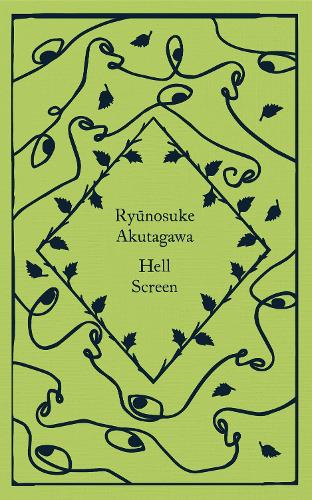
Hell Screen
Fiction, General Fiction
Ryunosuke Akutagawa (author) , Jay Rubin (translator)
Hardback Published on: 25/08/2022
Price: £12.99