

Reviews: Emma (15)
“Matchmaker,matchmaker, make me a match”
(Paperback)
Self-important, gossipy and sometimes just plain rude, Emma Woodhouse is an Austen heroine worlds away from her Pride and Prejudice counterpart, Elizabeth Bennett. Emma lives alone with her hypochiondriac father, spending her life matchmaking and mocking her les intelligent peers in order to spare herself from a life of monotony. However, will she learn her lesson when her efforts backfire? A novel less commercial, but thought to be more cleverly constructed than Pride and Prejudice, Emma will appeal to anyone who's ever delighted in interfering in other people's lives.
“Female, ergo done”
(Paperback)
Whilst it is Austen season -because it has been 250 years since her birth (16th December 1775)- a text like Emma should, really, be read whenever possible by any serious reader of English Literature; certainly of interest is the style of communication. One could argue that Austen analyses the microcosm of context and relationships. That small minor moment becomes an agent for change and transformation within a wider context of familial progress and effects of desire shared out in this 1815 novel. Jane Fairfax, Emma Woodhouse and Harriet Smith seem to be dissections of Austen's psyche, her controlling passions within a textual cipher in which the tiniest detail transforms a woman's future. But, it is also true of previous authors; Thomas Hobbes' Leviathan or Jean-Jacques Rousseau's The Social Contract. There are many like Austen so what, precisely, does make an Austen novel? The overlaying and overlapping of detail, mainly the social action of a bourgeois community split between a few houses of substance and connected to major figures in that social context. Whereas something such as The Lyrical Ballads would search for social, and natural, history Austen's milieu uncovers the desire and inner thought processes of a triad of nubile characters. In emotion, here, the overlaying of so many clues, codes and confusions reveals a world full of toss and turning; of full height of the moment. Gustav Flaubert did similarly in Madame Bovary. Fiona Stafford's editing with introduction and notes is adequate in that one doesn't quite require another edition for a few decades to come. The language of Austen is descriptive, analytical and invested with huge social and individual observation. Austen both observes, say, Emma's raison d'être and contrasts it to the life word of her father, or her intended other half Mr Knightley. The men in Emma certainly come across as dull, contrary and difficult. Some not able to understand the deep codification of feelings and social dynamics; in the female structure of the novel the life of Emma is often changed by a love rivals simple words, or even bodily emphasis. Austen herself lived her entire life with her parents and siblings; never married or engaged it could be argued that her novels' reveal her needs, demands and experiences in social intercourse. Emma suggests lesbianism and over loving of social friends; girlfriends are girlfriends with that little more desire. I used to think that Austen's style is Baroque; but actually it is more like Rene Descartes pealing of the onion as in Discourse On Method, and Meditations. Austen as cogito ergo sum? Or female, ergo done? The emphasis is on analysis. The religious isn't wholly traversed and exists as foundation in a novel which brilliantly reveals the concerns of female empowerment and the dread of social engagements. Emma happier with Harriet.
“Brilliant”
(Paperback)
Never easier to learn mandarin.
“Lovely and complete”
(Paperback)
Great book
“One of my favourite books”
(Paperback)
Emma was once famously described by Jane Austen as a character who no one but herself would like, is one of my favourite Jane Austen characters. Emma is rich, clever and beautiful and she sees no need to ever get married herself as she is content being mistress of her father’s estate. Emma loves to interfere and matchmake in the lives of those around her, until her matchmaking starts to unravel and sets her on a collision course with her longest and most dearest friend. Everything changes with the arrival of Harriet Smith as Emma decides to befriend her and turns Harriet into her project.
I love Emma this is one of my favourite books, Emma is charming and witty but is blind to what has been underneath her nose the whole time. Jane Austen is one of my favourite authors and this book is a comedy of manners, all of her characters and stories are very realistic and well thought out. I have watched a few adaptions of Emma but my favourite is the BBC adaption with Romala Garai as she plays the character very true to how Emma is in the book. Dear Mr Knightley, he is ever patient with Emma and thinks nothing of correcting her behaviour and encouraging her to do better, I love all the scenes of them interacting together. Really I can’t recommend this book enough as I rate it really highly.
Page of 3
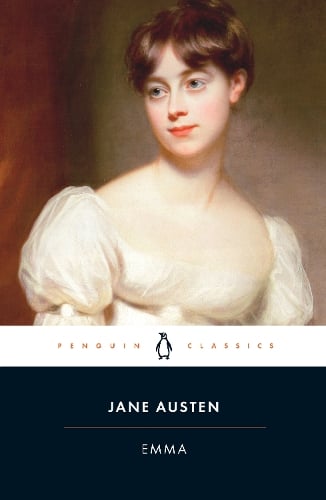
Emma
Fiction, Classic & Literature, Paperback Classis
Jane Austen (author) , Fiona Stafford (author of introduction) , Fiona Stafford (author of notes)
Paperback Published on: 05/03/2015
Price: £8.99