

Reviews: Double Cross (9)
“Excellent”
(Hardback)
After reading both Agent ZigZag and Operation Mincemeat I was looking forward to Ben Macintyres next foray in to the spying world and I wasnt disappointed. Macintyre writes with such a passion for the subject and for the real/ larger than life characters. If it wasnt true most of it would be unbelievable.
“well recomended”
(Hardback)
Bought this book for my son he really enjoyed it.
“XX All Areas”
(Hardback)
Deception in warfare relies on your opponent being clever enough to pay attention, but not so clever that he works out what your actual plans are. When your opponent is so stupid that he completely ignores your ingenious attempts to hoodwink him, there is a problem. This happened more often than you would think during the war. On one occasion in 1943, the Allies tried to concentrate German minds on France, with a view to drawing their forces away from Italy. ‘Cockade’ involved the parachuting of pigeons in special crates over the Pas de Calais, with messages attached asking for information on the coastal defences; double agents worked overtime transmitting news of an imminent attack; thirty ships with minesweeper escorts steamed purposefully over the Channel. In the words of one British officer, ‘It was an inspiring sight to see everybody doing his stuff to perfection … except, unfortunately, the Germans’. Ten miles off Boulogne, the invasion force hung around for a bit, hoping Jerry would notice them, then sailed sadly home.
The misinformation campaign for D-Day, Operation Fortitude, was much more successful. Here, the aim was to lull the German High Command into a false sense of insecurity. Were the Normandy landings the Allies’ main thrust or merely a diversion? Would there be further landings, in Norway, Belgium, Southern France? Churchill could not resist joining in the fun, hinting with elephantine subtlety that D-Day was the first of many assaults. This caused consternation in MI5, who had been telling German intelligence via their agents that public officials would not refer to the subject at all because it was supposed to be a secret. But the Germans held back, convinced that General Patton’s fictitious First US Army Group would be sailing from Kent within days. If they had spotted the deception, and thrown everything they had at the Normandy beaches, D-Day might have ended in catastrophe.
This is a thrilling story, thrillingly told. It is very easy for authors in this field to get carried away and pretend that their subject’s contribution was the defining event of the whole war. Ben Macintyre, thank Heavens, is more level-headed than that. As he says in his fine book, ‘Double Cross’, many of Fortitude’s wilder escapades, such as despatching a Monty lookalike to Gibraltar before D-Day, or infiltrating German pigeons with obviously British birds to sow suspicion as to the pigeons’ true allegiance, were too crafty for their own good. At any rate, the Germans failed to notice them. Where MI5’s amusingly named XX Committee won laurels was in its audacious use of double agents.
Some had been ‘turned’ days after landing in Britain; others had approached the Germans with the specific intent of becoming double agents. What a strange bunch they were: Czerniawski, Popov, Sergeyev, Chaudoir, and the greatest of them all, Juan Pujol Garcia, Agent Garbo himself, whose ever more outlandish reports were lapped up by the reliably credulous Huns. It beggars belief that the Abwehr, Germany’s intelligence service, could be so bad at their jobs. Time after time we see them falling for schemes a child might have seen through. Did it never occur to them that the ease with which their spies penetrated military installations was too good to be true? Or that the agents’ apologetic ‘Whoops’ messages after non-events like Cockade might cast doubt on their future accuracy? It seems not. Some people tap their noses wisely at this, and mutter that the Abwehr leadership was playing a very deep game. I think it is more likely they were just rubbish.
“XX All Areas”
(Paperback)
Deception in warfare relies on your opponent being clever enough to pay attention, but not so clever that he works out what your actual plans are. When your opponent is so stupid that he completely ignores your ingenious attempts to hoodwink him, there is a problem. This happened more often than you would think during the war. On one occasion in 1943, the Allies tried to concentrate German minds on France, with a view to drawing their forces away from Italy. ‘Cockade’ involved the parachuting of pigeons in special crates over the Pas de Calais, with messages attached asking for information on the coastal defences; double agents worked overtime transmitting news of an imminent attack; thirty ships with minesweeper escorts steamed purposefully over the Channel. In the words of one British officer, ‘It was an inspiring sight to see everybody doing his stuff to perfection … except, unfortunately, the Germans’. Ten miles off Boulogne, the invasion force hung around for a bit, hoping Jerry would notice them, then sailed sadly home.
The misinformation campaign for D-Day, Operation Fortitude, was much more successful. Here, the aim was to lull the German High Command into a false sense of insecurity. Were the Normandy landings the Allies’ main thrust or merely a diversion? Would there be further landings, in Norway, Belgium, Southern France? Churchill could not resist joining in the fun, hinting with elephantine subtlety that D-Day was the first of many assaults. This caused consternation in MI5, who had been telling German intelligence via their agents that public officials would not refer to the subject at all because it was supposed to be a secret. But the Germans held back, convinced that General Patton’s fictitious First US Army Group would be sailing from Kent within days. If they had spotted the deception, and thrown everything they had at the Normandy beaches, D-Day might have ended in catastrophe.
This is a thrilling story, thrillingly told. It is very easy for authors in this field to get carried away and pretend that their subject’s contribution was the defining event of the whole war. Ben Macintyre, thank Heavens, is more level-headed than that. As he says in his fine book, ‘Double Cross’, many of Fortitude’s wilder escapades, such as despatching a Monty lookalike to Gibraltar before D-Day, or infiltrating German pigeons with obviously British birds to sow suspicion as to the pigeons’ true allegiance, were too crafty for their own good. At any rate, the Germans failed to notice them. Where MI5’s amusingly named XX Committee won laurels was in its audacious use of double agents.
Some had been ‘turned’ after being caught; others had approached the Germans with the specific intent of working for Britain. What a strange bunch they were: Czerniawski, Popov, Sergeyev, Chaudoir, and the greatest of them all, Juan Pujol Garcia, Agent Garbo himself, whose ever more outlandish reports were lapped up by the reliably credulous Huns. It beggars belief that the Abwehr, Germany’s intelligence service, could be so bad at their jobs. Time after time we see them falling for schemes a child might have seen through. Did it never occur to them that the ease with which their spies penetrated military installations was too good to be true? Or that the agents’ apologetic ‘Whoops’ messages after non-events like Cockade might cast doubt on their future accuracy? It seems not. Some people tap their noses wisely at this, and mutter that the Abwehr leadership was playing a very deep game. I think it is more likely they were just rubbish.
Page of 2
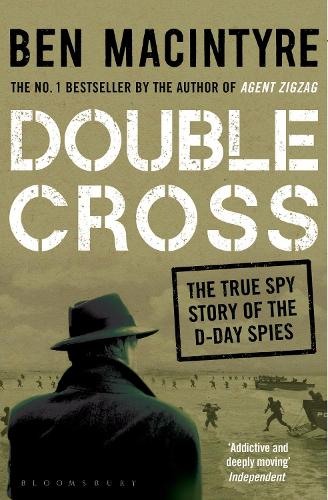
Double Cross: The True Story of The D-Day Spies
Non-Fiction, History , Military History , Military Theory , Second World War
Ben Macintyre (author)
Paperback Published on: 22/09/2016
Price: £12.99