

Reviews: Cursed Bread (17)
“A bit of fact, a bit of titillation: an abundance of quality.”
(Hardback)
Did you watch 'The Last of Us' and at some point think, 'hmm, the origin of this profound disaster seems terrifying plausible'? Well, allow me to partially validate that impression for a moment:
Over a period of two days in 1951, the town of Pont-Saint-Espirit in France succumbed to a mass poisoning. The symptoms of which involved severe hallucinations and compulsive violence. Seven people died. The blame was primarily put on a dangerous fungus that had found its way into the wheat supply of a single bakery.
Numerous theories about the incident have been proposed and discussed since then. Mackintosh herself says of them that 'none have ever been proven.' A more important statement than you might think because it essentially encapsulates one of the book's central premises: truth is a bit of a slippery concept when you can only rely on human beings to deliver and report it. Yes, them, with their pesky desires of the ego, their imperfect capacity for memory and their corruption of their finest faculties by their neuroses, and their blasted tendency to base their decisions on emotion. This is essentially the narrator Elodie's reason for how she presents her story. It's a narrative about the complexity and inherent unreliability of narrative. And the use of this historical setting, with it being known for its distinct lack of certainty, its natural character of verisimilitude, the various explanations – both nefarious and academic - for it, serves to assimilate that artistic function.
All of the characters are fond of embellishment, sometimes to the point of outright pride and masochism. And you'd be right in thinking that the narrator herself is of the unreliable ilk by this point. In fact, Elodie inadvertently admits it in the novel's very opening. Rhetorically, it's quite the rich one.
'When I recall the first time I met Violet, it embarrasses me.' I don't think said embarrassment refers to retrospective feeling toward the event of their meeting. It's the effort of the recollection that she's struggling with. She's not convinced by it for what it seems to miss about the inherent romanticism, as she sees it, of the experience. She goes on, writing, 'I hold the memories up to the light, and think – did it really happen like this?' Perhaps it's the name 'Violet', but the imagery of such a notion is heavy with a sense of artificiality, hence it becomes almost diagnostic. Like a doctor inspecting X-Rays of interior trauma, as if a process of improvement is underway, a process of 'doctoring' if you will. This is followed by interrogatives that seem, indeed, to interact, gently but quickly coaxing a different register from the narration. The heavy suggestion of forthcoming modification, the writing's evolution into something more impressionistic than mimetic, behind that one fragmentary interrogative 'more generously?' is the first signpost of the reader's upcoming, inherently uncertain and fragmented ride. Then the prose internally deviates, syntactically, like its convinced by its own coaxing. It becomes more resplendent, visually intense, and ornate. It seems to struggle with the effort at first; the numerous connectives contributing to that impression, lending the speech a slightly stilted character. Then the penultimate sentence of the paragraph hits - it's Elodie finding the style she thinks most adequately conveys the intensity of her infatuation, the profundity of her feeling. One wonders if this is a story that has already been revisited and modified with the final clause, 'perhaps it's best to be honest, now.' That one comma suggests a pause of consideration, of a kind of accidental honesty. It entices you to think about just how grand the supposed 'truth' can be; since it'll hardly be mundane if, as she claims, 'no one' is now around to stop her embellishing further, and, as we know, the fatal nature of the disaster to come.
It's all a splendid suggestion of what the story is only partially about - the efforts, mental and social, people can go to to find more significance in the past. Hence the embellishment. Hence the many scenes in which one character confides in another with a deeply personal tale or a local myth. Hence Elodie's infatuation with a couple that moves to town, a pair that seemingly enjoy a far greater degree of physical intimacy and passion than she does with her husband, the baker. And from that point I shall say no more, as I hope you'll take the time to read it. Jealousy, obsession, desire, perversity, sadism, and revenge form the core basic themes; some of the best wells literary works have been known to draw from. And that aforementioned outbreak lingers over many elements of the piece, seemingly influencing the behaviour of the main characters as well as the backdrop before it even hits, becoming an almost paranormal force which serves to make this not just a slightly challenging and subsequently rewarding read, not just a boldly chilling and disturbing one, but a spooky one too.
“Women's Prize for Fiction Longlisted”
(Hardback)
Thank you to the publishers for this review copy, this hit my radar as soon as the Women's Prize for fiction longlist was announced.
The story is gripping and particularly interesting since it is based on an actual event.
Loved the characters, they really get under your skin.
The writing is addictive and I hope this book makes the shortlist!
Very happy to recommend this on to other readers, you definitely will not be disappointed!
“Can I give it more stars please?”
(Paperback)
Fantastic book. Enough mystery to engage you but not so much you gent entangled with it. I imagine fans of “Chocolat” by Joanne Harris might enjoy this. I’m going to read all Sophie’s books now! Highly recommended!
“Atmospheric, complex, and haunting”
(Hardback)
A fictional take on the 1951 mass poisoning of Pon Saint Espirit, a small French village, this novel is an atmospheric, complex, and haunting read. Elodie's life in the strange and eerie setting is so hypnotic - you can't help but be hooked, needing to know how it's going to end. I can't say too much without giving it away but it's safe to say I had no idea where this book was going - the ending was jaw-dropping.
Sophie Mackintosh wrote one of my all-time favourite novels, 'The Water Cure', so I was very excited to read this - happily, it was great. I love her writing style, and the plot was so cleverly created. She's so subtle in how she builds her characters, reeling you in until you can't help but have strong feelings towards all of the,. There is a mystery to this novel too that I loved. I would definitely recommend it!
“A complete whirlwind!”
(Paperback)
This book was a whirlwind 184 pages. It felt like a fever dream. We follow a woman called Elodie who is reminiscing on a poignant moment in her life (based on a true historical event in 1950s France) when she meets a mysterious and beautiful woman called Violet. We aren't given the full picture at first and as you turn the pages you sink deeper and deeper into Elodie's mind both her present and her past. We look at her relationship with her husband, and her curiousness about Violet's husband The Ambassador and also we talk a lot about bread.
This book was alluring, enticing, and vague and Makintosh's characterisation deserves a round of applause. I devoured this book in one day and most of it in a two-hour reading stint at my local cafe. Flicking between the past and the present with such short chapters had me craving for more. I loved the structuring of this book and the way the story is laid out. I must read more of Mackintosh's work!
Page of 4
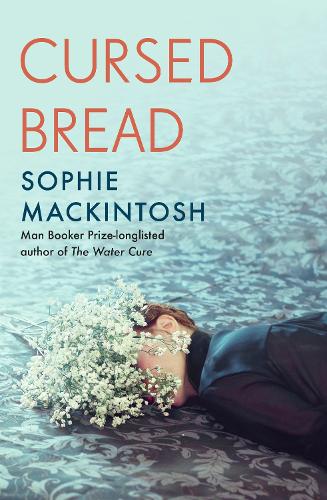
Cursed Bread
Fiction, Crime & Thrillers, General Fiction
Sophie Mackintosh (author)
Hardback Published on: 02/03/2023
Price: £16.99