Posted by Peter Watson on March 17th, 2022
We are endlessly fascinated by the French. Especially so just now with a Presidential election around the corner, in April.
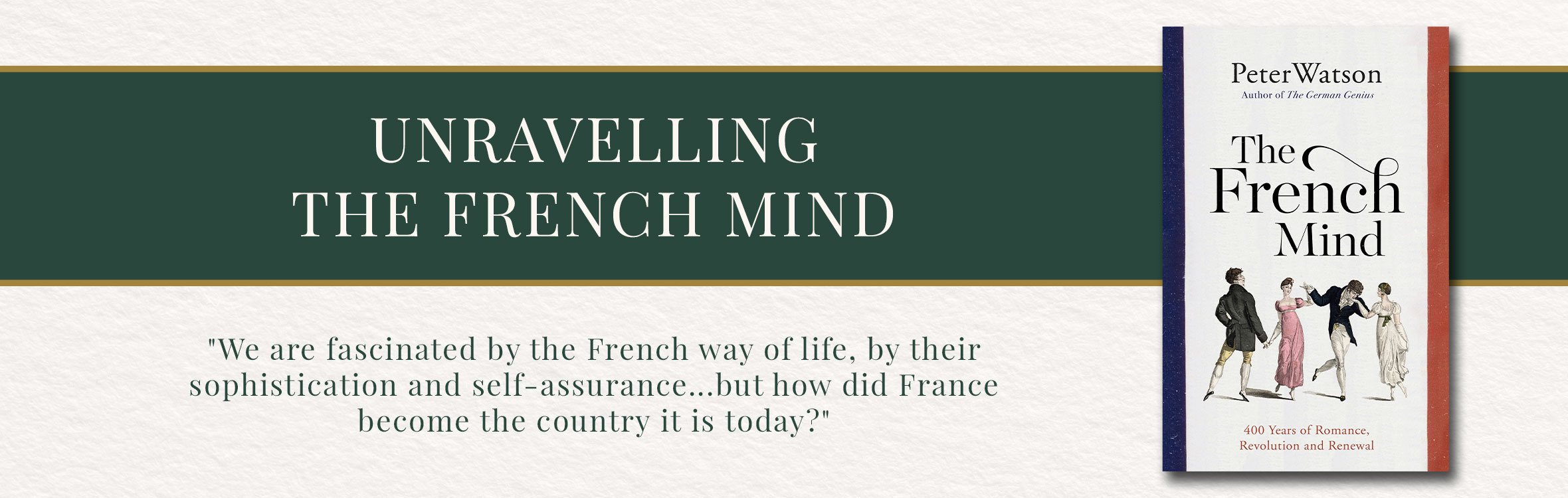
We are fascinated by the French way of life, by their sophistication and self-assurance, and even by their insistence that they are, indeed, exceptional. But how did France become the country it is today and what is it that really sets it apart?
I think there is a serious answer and I set out to explain it in The French Mind. A few years ago, I wrote a book about Germany, The German Genius, which underlined that there is far more to Germany than the twelve years of the Third Reich. The book was very well received, and I am hoping that my view of the French will be equally popular.
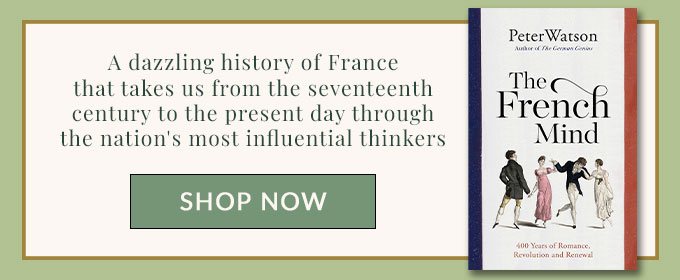
I cover 400 years of French history, from the seventeenth century to the present day through France’s most influential thinkers. In doing so I open the door to the Renaissance and Enlightenment salons that were breeding grounds for poets, philosophers, dramatists and scientists, and I tell the forgotten story of the extraordinary succession of remarkable women who ran these institutions. Often sidelined in regular histories of France, these salonnières, as they were called, nonetheless exerted a very real ‘soft power’ which helped France maintain a profile more stylistically intellectual than other nations. It is perhaps what we most envy and admire about the French.
The narrative takes us into Bohemian cafés and cabarets, into Parisian ‘chic’ high culture via stylish French philosophies of food, fashion and sex, while growing unrest hastened the bloody birth of a republic. From the revolution of 1789 to France’s occupation by Nazi Germany, I show how a unique series of devastating military humiliations helped shape a ‘culture of defeat’ which in turn determined the resilient, proud, innovative character of the French.
In doing so, hope I have succeded in bringing to life the writers, revolutionaries and painters who loved, inspired and rivalled one another over generations, whose ideas and minds shaped a nation whose global influence – in art, culture and politics – cannot be overstated.