Posted on July 16th, 2021 by Jane McMorland Hunter
I have far too many cookery books but my excuse is that I read them as well as cook from them. I’m clearly not the only person to do this, as books by authors such as Nigel Slater are often produced in a format that is easier to read rather than cook from. Even Nigella Lawson’s How to Eat was published in a novel-shaped paperback although in this case the book was so thick and heavy it might well have resulted in serious injury if someone had dropped off while reading it in bed.
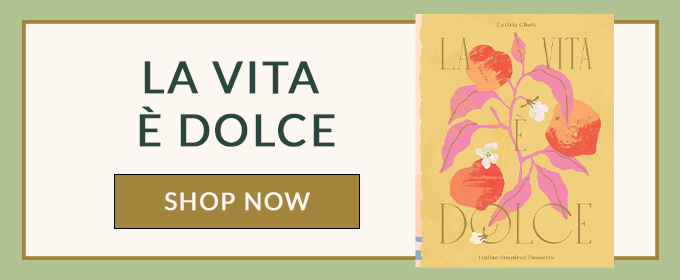
Bitter Honey by Letitia Clark and its new sibling La Vita è Dolce are books to cook from and read in equal measure. The subtitle of the first is Recipes and Stories from the Island of Sardinia. It is a delightful mixture of recipes, anecdotes and interesting background information. I have never seen the point of polenta, regarding it as tasteless flab or goo according to the consistency. One of the recipes here, with a ragù of sausage meat, tomatoes and sage, topped with mozzarella, pecorino and basil, has transformed my opinion. Likewise my view of panettone has been changed. I had always viewed it as a poor relation of Christmas cake. Made into a superior bread-and-butter pudding with saffron custard it becomes a food fit for the gods – or one’s friends as lockdown eases. Don’t wait till Christmas – this is perfect summer food.

La Vita è Dolce is written in the same charming style, but this time with recipes that cater for the sweeter side of life. Many of the cakes, tarts, biscuits, puddings and pastries look magnificent but this is not a fiddly patisserie-style book; the recipes are enticing rather than intimidating. In a recipe for Sbriciolata (a delicious ricotta and dark chocolate almond crumble tart) Letitia describes the crumble mixture as ‘a loose and ragged rubble’ - none of the ‘fine breadcrumbs’ so often called for are deemed necessary here.
A preliminary read-through to find which recipes I’d like to make resulted in a huge list of potential delectables. I’m delighted to discover that Amaretti are easy to make and that there is a cake with Campari – a delicious-looking, upside-down creation with oranges and melt-in-the-mouth yoghurty sponge.
In between the recipes there are short pieces on various ingredients, moka coffee pots and quanto basta, or why recipes can never be exact. Letitia is the perfect cookery writer: opinionated, helpful and easy-going. I made Ricciolinis partly because I love the combination of almonds and cherries but, if I’m honest, mainly because the name translates as ‘little hedgehogs’. They were utterly delicious.