Posted by Caroline Elkins on March 24th, 2022
Rhodes Must Fall. Churchill was a racist. Windrush. Boris Johnson pushing an empire 2.0. Recently, nearly sixty percent of Britons when polled said empire was something to be proud of. Imperial history wars and their profound saliency today. How did we arrive here? How do we in the present understand the past and the ways in which it shapes the world in which we’re living?
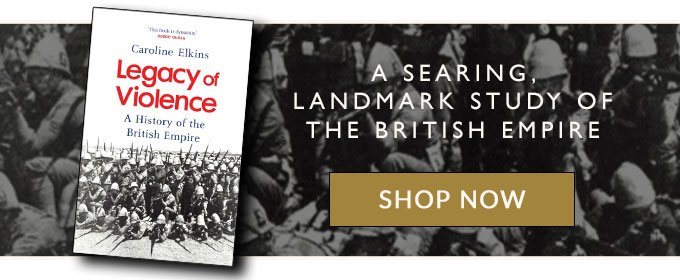
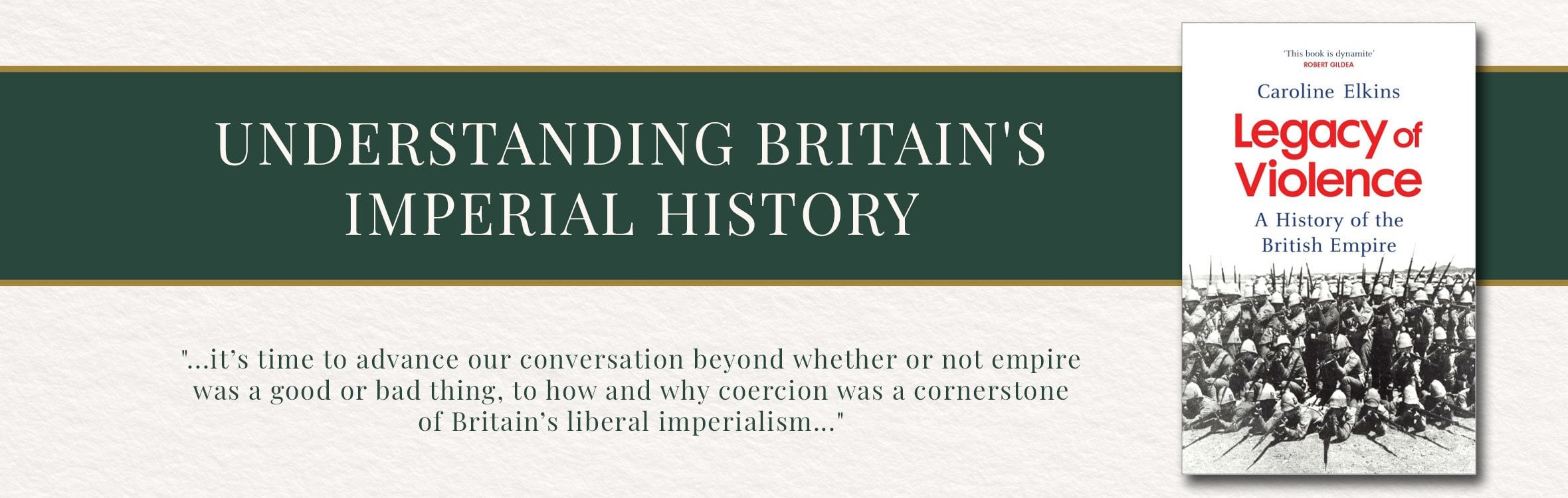
To answer these questions, it’s time to advance our conversation beyond whether or not empire was a good or bad thing, to how and why coercion was a cornerstone of Britain’s liberal imperialism, its reformist civilizing mission, it’s White Man’s Burden – and that’s the journey Legacy of Violence will take you on.
Over a decade ago I set out to tell a comprehensive story of liberalism and violence in the empire. I undertook research across 14 different sites in a dozen countries in Africa, Europe, the Middle East, and Asia, excavating archives and undertaking interviews with hundreds of eye witnesses to the empire.
The result: a book that reveals the bureaucratic and legal machinery of oppression – something I call “legalized lawlessness,” or the process of making legal otherwise illegal behavior, and protecting British security forces from prosecution. The book also dissects liberal imperialism - the ways in which Britons at home and in the empire worked, reworked, and understood colonial violence as part of their liberal imperial project - demonstrating liberalism’s perfidiousness across the empire and at home. It is a rejoinder to the myth of British exceptionalism.
At its core, Legacy of Violence is also a book about people – imperial actors – from baby faced colonial administrators to towering figures like Field Marshall Montgomery, who traveled crisscrossed the empire, bringing with them liberal imperial ideas as well as coercive practices and the legal systems that enabled them. Their movements conjure the the silks of a spider’s web, whose intricate image only becomes complete by stepping back to take in its entirety.
I invite you to go on Legacy of Violence’s journey with me, to take in the entirety of its lengthy and troublesome story, and to advance our conversation about Britain’s empire by asking how and why coercion was systematically deployed and the pivotal role it played in Britain’s reformist civilizing mission.