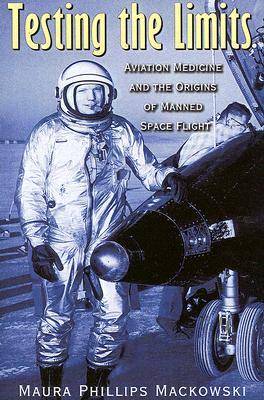
Testing the Limits: Aviation Medicine and the Origins of Manned Space Flight
Synopsis
In 1958 the United States launched its first satellite and created the National Aeronautics and Space Administration (NASA). By 1961 NASA was confident enough to put a human being into space thanks to decades of military medical research. Efforts at Wright Field and the army's School of Aviation Medicine, a world-class research institution, were the real reason for the successful start to America's manned space program. In "Testing the Limits", Maura Phillips Mackowski describes the crucial foundational contributions of military flight surgeons who routinely risked their lives in test aircraft, research balloons, pressure chambers, rocket-propelled sleds, or parachute harnesses. Drawing on rare primary sources and interviews, Mackowski also reveals the little-known but vital contributions of German emigre scientists whose expertise in areas unknown to Americans created a hybrid specialty: space medicine. Mackowski reveals new details on human acromedical experimentation at Dachau, Washington's decision to limit astronaut status to males, and the choice to freeze the air force out of the research specialty it had created and brought to fruition.
Publisher information
- Publisher: Texas A & M University Press
- ISBN: 9781585444397
- Dimensions: 229 x 152 x 25 mm
- Weight: 630g
Customer Reviews
You may also like...