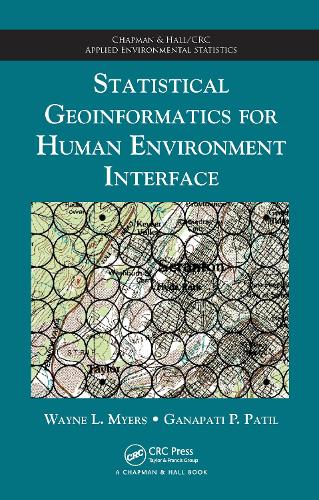
Statistical Geoinformatics for Human Environment Interface
Synopsis
Statistical Geoinformatics for Human Environment Interface presents two paradigms for studying both space and interface with regard to human/environment: localization and multiple indicators.
The first approach localizes thematic targets by treating space as a pattern of vicinities, with the pattern being a square grid and the placement of vicinities centrically referenced. The second approach explores human/environment interface as an abstraction through indicators, neutralizing the common conundrum of how to reconcile disparate spatial structures such as points, lines, and polygons. These paired paradigms enable:
- The capacity to cope with complexity
- Systematic surveillance
- Visualization and communication
- Preliminary prioritization
- Coupling of GIS and statistical software
- Avenues for automation
Illustrating the interdisciplinary nature of geoinformatics, this book offers a novel approach to the spatial analysis of human influences and environmental resources. It includes practical strategies for statistical and spatial analysis.
Publisher information
- Publisher: Taylor & Francis Ltd
- ISBN: 9781420082876
- Number of pages: 223
- Dimensions: 234 x 156 mm
- Weight: 521g
- Languages: English
Customer Reviews
You may also like...