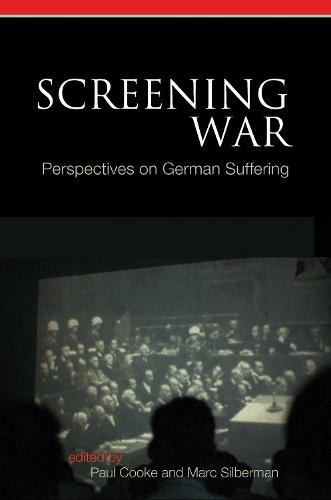
Screening War: Perspectives on German Suffering
Synopsis
Re-examines German cinema's representation of the Germans as victims during the Second World War and its aftermath.
The recent "discovery" of German wartime suffering has had a particularly profound impact in German visual culture. Films from Margarethe von Trotta's Rosenstrasse (2003) to Oliver Hirschbiegel's Oscar-nominated Downfall (2004) and the two-part television mini-series Dresden (2006) have shown how ordinary Germans suffered during and after the war. Such films have been presented by critics as treating a topic that had been taboo for German filmmakers. However, the representation of wartime suffering has a long tradition on the German screen. For decades, filmmakers have recontextualized images of Germans as victims to engage shifting social and ideological discourses. By focusing on this process, the present volume explores how the changing representation of Germans as victims has shaped the ways in which both of the postwar German states and the now-unified nation have attempted to facethe trauma of the past and to construct a contemporary place for themselves in the world.
Contributors: Seán Allan, Tim Bergfelder, Daniela Berghahn, Erica Carter, David Clarke, John E. Davidson, Sabine Hake, JenniferKapczynski, Manuel Köppen, Rachel Palfreyman, Brad Prager, Johannes von Moltke.
Paul Cooke is Professor of German Cultural Studies at the University of Leeds and Marc Silberman is Professor of German at the University of Wisconsin.
Publisher information
- Publisher: Boydell & Brewer Ltd
- ISBN: 9781571134370
- Number of pages: 312
- Dimensions: 229 x 152 mm
- Weight: 640g
- Languages: English
Customer Reviews
You may also like...