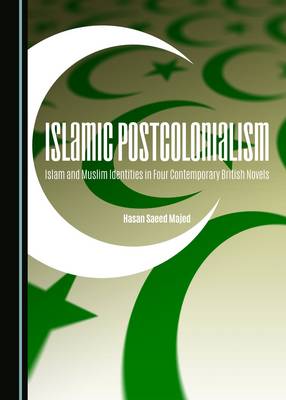
Islamic Postcolonialism: Islam and Muslim Identities in Four Contemporary British Novels
Synopsis
Islamic postcolonialism is a theoretical perspective that combines two components which have up until now existed in a state of tension. As a secular theory, postcolonialism has notably failed to account for Muslim priorities; it has, for instance, had severe problems critiquing the anti-Islam polemics of The Satanic Verses, as is evidenced by Edward Said's support for Rushdie, in spite of his criticism of the stereotypical representation of Islam and Muslims in the West.Islamic postcolonialism applies the anti-colonial resistant methodology of postcolonialism from a Muslim perspective, exploring the continuance of colonial discourse in part of the contemporary western writing about Islam and Muslims.This book explores how Islam is depicted and Muslim identities are constructed in four representative works of contemporary British fiction: Hanif Kureishi's The Black Album (1995), Monica Ali's Brick Lane (2003), Fadia Faqir's My Name is Salma (2007), and Leila Aboulela's Minaret (2005). Salman Rushdie's The Satanic Verses (1988) is also discussed in terms of its crucial role in fostering what some Muslims might consider polemical and stereotypical positions in writing about Islam.
Publisher information
- Publisher: Cambridge Scholars Publishing
- ISBN: 9781443876308
- Number of pages: 195
- Dimensions: 212 x 148 mm
- Languages: English
Customer Reviews
You may also like...