Function and Reactive Domain Modeling
Synopsis
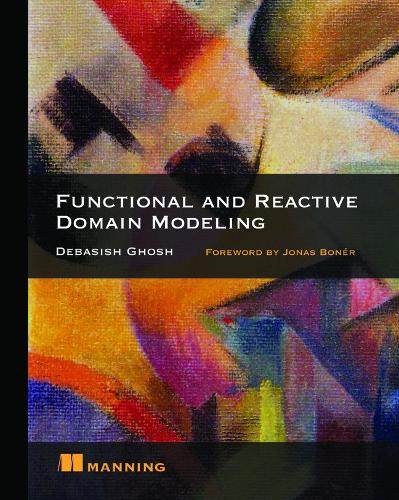
Functional and Reactive Domain Modeling teaches readers how to think of the domain model in terms of pure functions and how to compose them to build larger abstractions. It begins with the basics of functional
programming and gradually progresses to the advanced concepts and patterns needed to implement complex domain models. The book demonstrates how advanced FP patterns like algebraic data types,
typeclass based design, and isolation of side-effects can make models compose for readability and verifiability.
On the subject of reactive modeling, the book focuses on higher order
concurrency patterns like actors and futures. It uses the Akka framework
as the reference implementation and demonstrates how advanced
architectural patterns like event sourcing and CQRS can be put to great
use in implementing scalable models. It offers techniques that are
radically different from the standard RDBMS based applications that are
based on mutation of records. It also shares important patterns like using
asynchronous messaging for interaction based on non blocking
concurrency and model persistence, which delivers the speed of inmemory
processing along with suitable guarantees of reliability.
Key Features:
Illustrates idioms and best practices
Starts with Functional Programming basics
Progresses to advanced concepts and patterns
Offers radically different techniques from the standard RDBMS
AUDIENCE
Written for developers and architects comfortable with the basic ideas
of functional programming and traditional domain modeling. No prior
exposure to Akka or reactive application design is expected.
ABOUT THE TECHNOLOGY
Domain modeling is a technique for creating a conceptual map of a problem
space such as a business system or a scientific application, so that developers
can write the software more efficiently.
Reactive application design, which uses functional programming principles
along with asynchronous non-blocking communication, promises to be a
potent pattern for developing performant systems that are relatively easy to
manage, maintain, and evolve. Typically such models are called "reactive"
because they are more responsive both to user requests and to system loads.
Publisher information
- Publisher: Manning Publications
- ISBN: 9781617292248
- Number of pages: 320
- Dimensions: 235 x 185 x 18 mm
- Weight: 540g
- Languages: English
Customer Reviews
You may also like...