


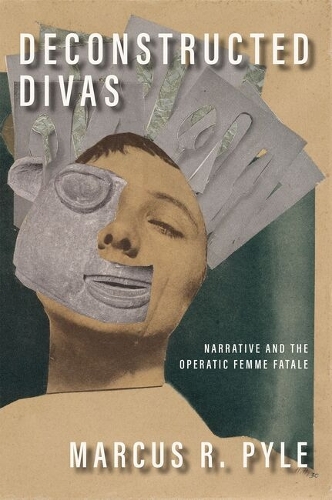
Deconstructed Divas: Narrative and the Operatic Femme Fatale
Synopsis
How can a marginalized body carve out a space for freedom amidst symbolic annihilation? To answer this question, Marcus R. Pyle looks to the femme fatale as a trope of artistic production and social culture during the turn of the twentieth century. The femme fatale^—&^the hypersexual, mysterious, magnetic, and "dangerous" woman^—^was the enemy of the fin de si^è^cle. Ultimately, she functions as a trope who is a catalyst that contributed to the erosion and fracture of musical form that characterized the modernist period. It is the trope itself, endowed with certain qualities of subjectivity, that leads to innovations of musical form and to the transcontinental exchange of the femme fatale^—^from French and German opera to Harlem Renaissance vaudeville performances.
In essence, this book is an exploration of the tensions between stereotype and self-definition. It traces depictions of the femme fatale within and across operas and operatic moments between the years 1875^–^1937, questioning why global audiences between those years so enamored by this trope. Marcus R. Pyle takes this uptick to question the relationship between the trope and emergent modernism. The ultimate claim is that the femme fatale is an archetype who, at specific moments, manifests corporeally. In other words, she resists narrative, gendered, and racial confinement. Thus, Deconstructed Divas shows that opera is not only the undoing of women but suggests that the femme fatale undoes opera.
Pyle examines just how the femme fatale comes to presence herself across various plots and to outwit her narrative confines. Reevaluating some of operas most infamous characters^—armen to Lulu^—yle proposes a theory of fictional characters who can be affective. They can sojourn in other worlds and muss up distinctions between reality and fiction. Moving from textual trope to lived embodiment, Pyle inaugurates an aesthetic ontology that revises modernism and reimagines the way fictional characters manifest and overcome.
To end, the book provides accounts of black opera stars who have donned the role of the femme fatale as an avatar of resistance.
Publisher information
- Publisher: Oxford University Press Inc
- ISBN: 9780197821169
- Number of pages: 216
- Dimensions: 235 x 156 mm
- Languages: English