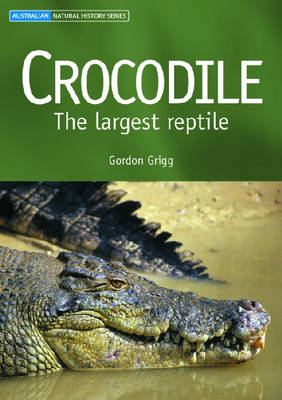
Crocodile: The Largest Reptile
Synopsis
Crocodilians are the world's largest reptiles, and Australia is home to the largest of all, the estuarine or salt water crocodile, Crocodylus porosus. Nobody feels neutral about crocodiles. They are creatures of great contrast, which can stay patiently still for days, then move like greased lightning to snap up a meal. They are formidably strong, active predators, with jaws that can tear apart a calf or a kangaroo, yet a mother crocodile gently assists her young to hatch and carries them to the water in her mouth.This book focuses on the many skills that crocodilians have which have enabled their survival since the Mesozoic. Excellent swimmers, with precise control over buoyancy, they can also move fast on land. Australia's other species, Crocodylus johnstoni, can even gallop! Recent work using satellite telemetry shows that they make substantial coastal journeys and, because they return 'home' if translocated, must have good navigational skills as well. They can remain submerged for long periods, assisted by the most elegant and complex heart of all the vertebrates.Crocodylus porosus is equally at home in the sea and in freshwater, and the book explores the physiological mechanisms that support this.
As the largest surviving 'cold blooded' reptile, they provide a window on the probable body temperature of dinosaurs. The book explains how they live in salt water, how their hearts work, the daily and seasonal cycles in body temperature, and how satellites have tracked their travels.
Publisher information
- Publisher: CSIRO Publishing
- ISBN: 9780643093447
- Number of pages: 168
Customer Reviews
You may also like...