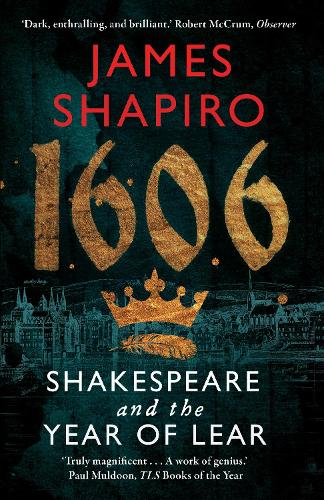
1606: Shakespeare and the Year of Lear
Synopsis
1606: William Shakespeare and the Year of Lear traces Shakespeare's life and times from the autumn of 1605, when he took an old and anonymous Elizabethan play, The Chronicle History of King Leir, and transformed it into his most searing tragedy, King Lear. 1606 proved to be an especially grim year for England, which witnessed the bloody aftermath of the Gunpowder Plot, divisions over the Union of England and Scotland, and an outbreak of plague. But it turned out to be an exceptional one for Shakespeare, unrivalled at identifying the fault-lines of his cultural moment, who before the year was out went on to complete two other great Jacobean tragedies that spoke directly to these fraught times: Macbeth and Antony and Cleopatra. Following the biographical style of 1599, a way of thinking and writing that Shapiro has made his own, 1606: William Shakespeare and the Year of Lear promises to be one of the most significant and accessible works on Shakespeare in the decade to come.
'An absorbing history focusing on 12 months that inspired some of Shakespeare's most successful plays.' - The Mail
Publisher information
- Publisher: Faber & Faber
- ISBN: 9780571235797
- Number of pages: 448
- Dimensions: 197 x 129 x 27 mm
- Weight: 362g
- Languages: English
Customer Reviews
View all