In the summer of 1948, Judy Montagu, the 25-year-old only child of Venetia Stanley, was sorting through her late mother’s effects in the family’s country mansion at Breccles in Norfolk, when she came across a large cache of love letters on the headed notepaper of 10 Downing Street. Although most were unsigned, it was immediately obvious they were from the Prime Minister, Herbert Henry Asquith, the majority written between Christmas 1913 and May 1915. Interspersed among them were all manner of secret documents – decrypted diplomatic telegrams, documents about armaments production and troop deployments on the Western Front, letters from Lord Kitchener, Winston Churchill and Sir John French, commander-in-chief of the British Expeditionary Force. In all, the archive amounted to 560 letters: more than 300,000 words.
It was the first Judy Montagu knew of her mother’s affair, conducted when she was still single at the age of 26-7, with a man more than twice her age.
Nothing of Venetia’s side of the correspondence survives even though internal evidence she must have written him at least three hundred letters. Asquith seems to have burnt them in December 1916, more than a year after their affair came to an end.
Judy Montagu owned the physical letters, but not the literary content, which was the copyright of Asquith’s descendants (he had died in 1928). Sometime around 1960, she showed the letters to Mark Bonham Carter, one of Asquith’s grandsons, who also happened to be a publisher. He had a transcript made, and showed it to his mother, Lady Violet Bonham Carter, Asquith’s daughter and at one time Venetia’s best friend. She was horrified by the potential damage the letters could do to her father’s reputation. Mark warned her that the correspondence was bound to be revealed sooner or later: one of Venetia’s subsequent married lovers had been the press proprietor, Lord Beaverbrook, who knew about the letters. There was a fear he might reveal the affair in the Sunday Express.
Reluctantly, and on the understanding that the letters would be treated respectfully, and that she retained the power of veto, the letters were shown to Roy Jenkins, who was commissioned by Mark to write a biography of Asquith, published in 1964. Jenkins stuck to his side of the bargain. All the endearments – “My darling…. Do you know how much I love you? No? Just multiply the stars by the sands” – were excised, as was the evidence that Asquith might not have formed a coalition government with the Tories in 1915 if Venetia had not ended their affair. He went so far as to claim that the relationship was no more of a distraction than Lloyd George’s fondness for hymn-singing.
In 1982, under Bonham Carter’s supervision, a scholarly edition of just over half the letters was published by Oxford University Press. The notes and historical essays are masterly. But, again, the cloak of discretion was maintained, the editors at pains to insist the affair was essentially a kind of platonic fantasy on Asquith’s part.
I have used the licence granted to historical novelists to try to bring the relationship to life. By reconstructing Venetia’s side of the correspondence, one begins to sense the depth of their mutual fondness. By studying the nature of the car in which they took their regular weekly drives of up to two hours, one realises they had ample opportunity for complete privacy.
In short, I don’t think the affair was platonic – especially given the well-attested amorous natures of both Venetia and the Prime Minister – and nor was it inconsequential in British political history. As the pressures of the war increased, Asquith came to rely on her solace and advice more and more, until eventually he was writing to her three or even four times a day. By the start of 1915, she plainly felt it was getting out of hand. When, in May 1915, she announced she was marrying someone else, he fell into a lovesick despair that was at the very least a factor in his decision to form a coalition with the Tory Opposition less than a week later. There was never to be a Liberal government again.
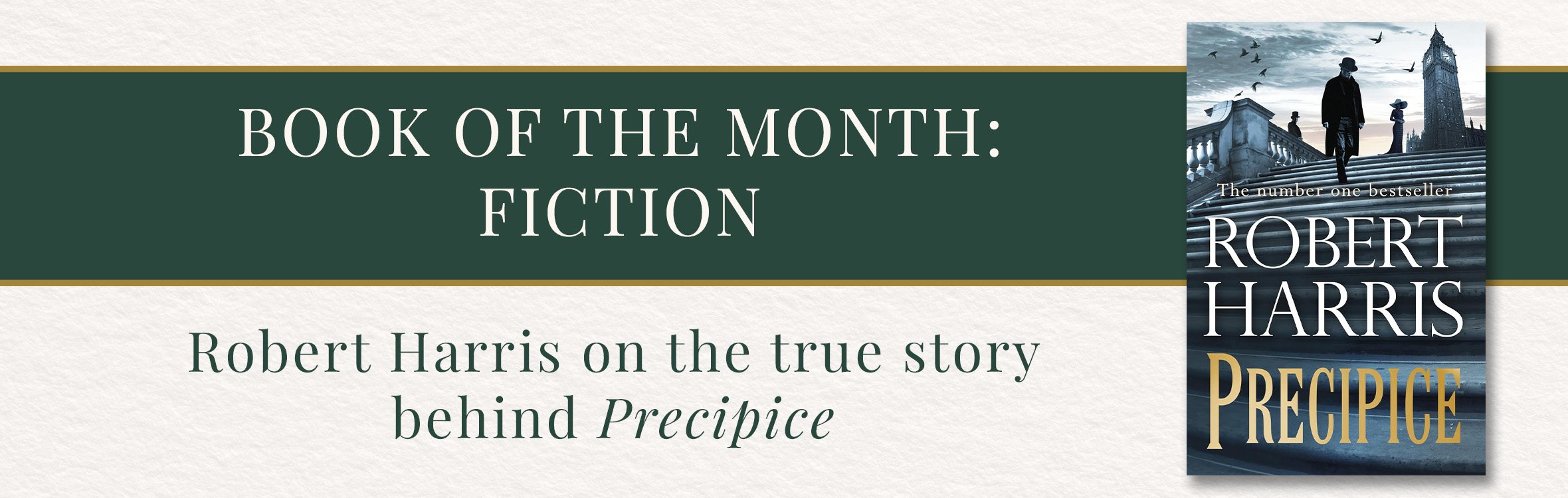
I have introduced a third, purely fictional character, in the shape of an intelligence officer called upon to investigate the leak of secret documents. Otherwise, I have relied on Asquith’s own words, and on her imagined responses, to try to give the reader the sense of the extraordinary drama of July 1914 – May 1915, when Europe, and the whole settled world of British society, went over the edge of a precipice.